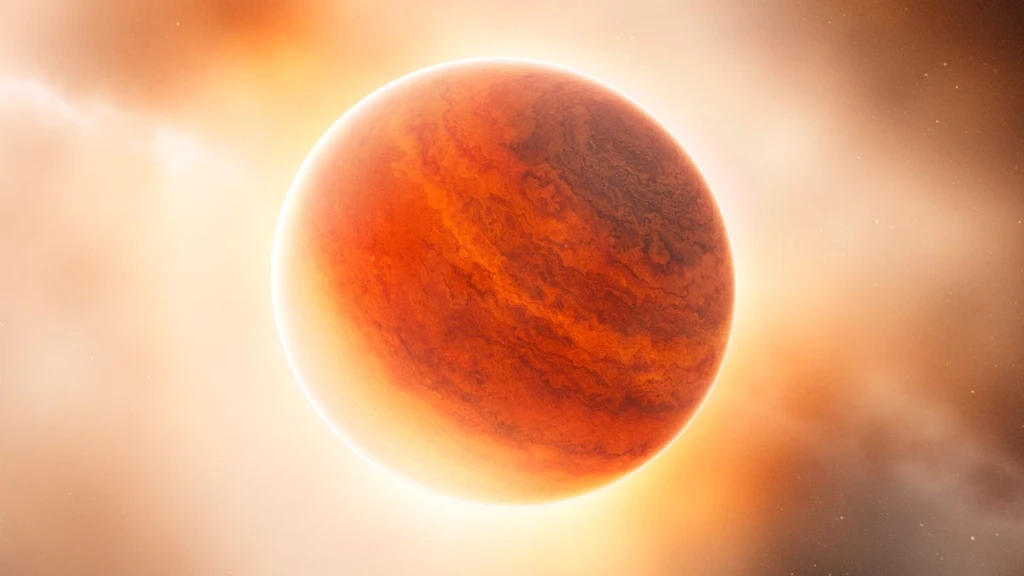
Scientists are grappling with the discovery of massive gas giants, dubbed 'Super-Jupiters,' that orbit stars over 130 light-years away. These colossal planets, ranging from 5 to 10 times the mass of Jupiter, are found in locations where traditional formation theories struggle to account for their existence.
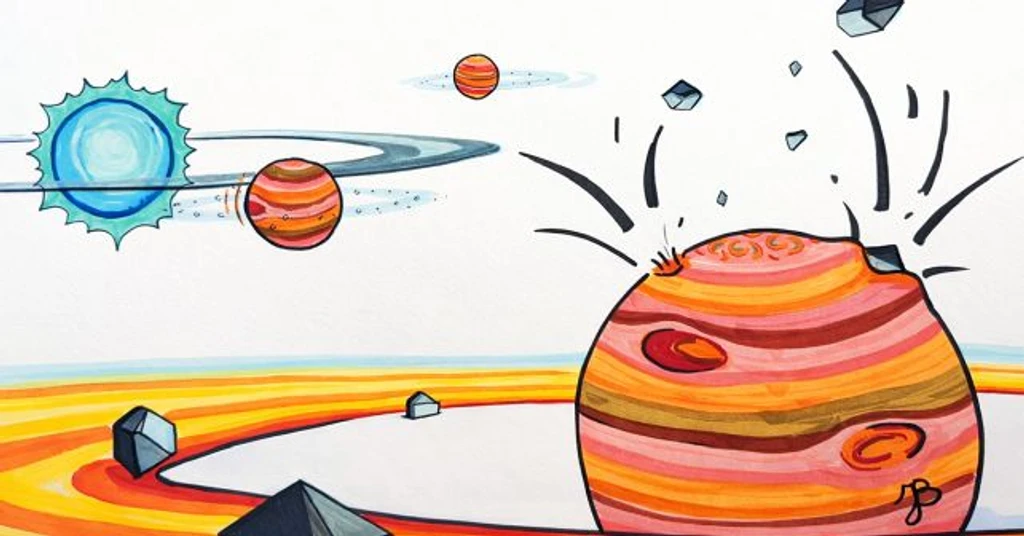
Using the James Webb Space Telescope's NIRSpec instrument, researchers analyzed the atmospheric chemistry of three gas giants orbiting the star HR 8799. The analysis focused on detecting sulfur, a key indicator of whether planets form by accreting solid material. The findings revealed significant sulfur enrichment in the atmospheres of these planets, suggesting they incorporated large amounts of solid matter during their formation.
This detection of sulfur, alongside other heavy elements like carbon and oxygen, points to a formation process similar to that of Jupiter, despite the Super-Jupiters' extreme mass and their vast distances from their host star. These distances, ranging from 2 to 10 billion kilometers, raise questions about whether standard core accretion models, which involve slow clumping of solid matter, are sufficient. Some experts suggest these behemoths might form through gravitational collapse, a process more akin to brown dwarf formation.
The efficiency with which these massive planets formed at such distances remains a significant puzzle for astronomers, challenging current understanding of planetary system development.