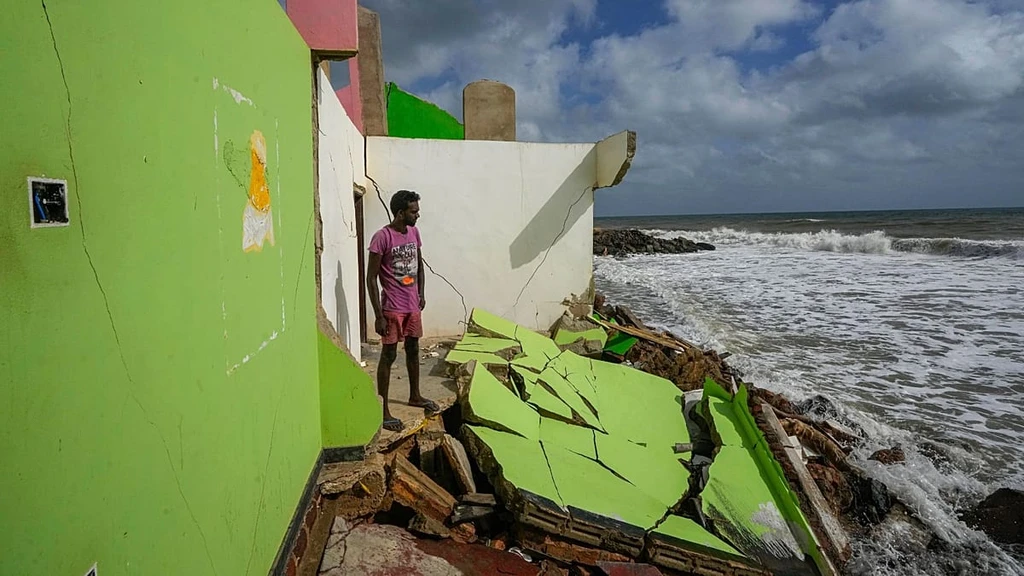
New research indicates that rising sea levels may threaten tens of millions more people than previously estimated, due to underestimations in coastal water heights. A study analyzing hundreds of scientific assessments found that approximately 90 percent underestimated baseline coastal water levels by an average of 30 centimeters.
The discrepancy arises from a "methodological blind spot" in how sea and land altitudes are measured, according to study co-author Philip Minderhoud of Wageningen University & Research. Many studies incorrectly assume a zero-meter starting point for sea level impact calculations, failing to account for factors like waves, currents, and tidal variations.
Adjusting to more accurate coastal baselines suggests that a 1-meter sea level rise could inundate up to 37 percent more land, potentially threatening 77 million to 132 million additional people. This heightened risk is particularly pronounced in the Global South, the Pacific, and Southeast Asia.
Climate scientist Anders Levermann notes that the risk of extreme flooding is "much higher than people thought," especially in Southeast Asia, a region already vulnerable to sea level rise. For island nations like Vanuatu, the impacts are not theoretical, with visible shoreline erosion and submerged infrastructure.
While some outside scientists suggest the implications might be overstated and that local planners are aware of coastal issues, the findings underscore potential gaps in government planning for climate risks. Experts emphasize that accurate baseline measurements are crucial for effective risk assessment and mitigation strategies.