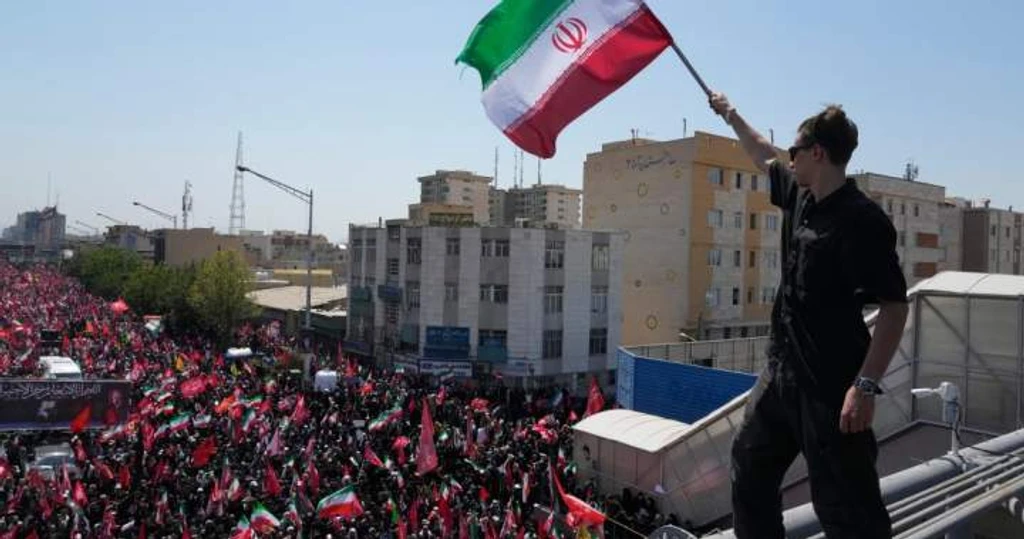
The United States launched a new round of airstrikes against Iran early Thursday, and Tehran responded by targeting U.S.-allied nations in a major exchange of fire that has shaken an interim peace deal.
The back-and-forth attacks appeared larger in scale than previous days. Sirens sounded in Bahrain, home to the U.S. Navy's 5th Fleet, and missiles targeted Kuwait and Qatar. Jordan, where U.S. troops are stationed, also reported incoming fire.
The U.S. military's Central Command said it struck approximately 90 targets across Iran. The strikes were intended to degrade Iran's ability to threaten freedom of navigation in the Strait of Hormuz, a critical global energy chokepoint.
An Iranian official accused the U.S. of launching a strike later Thursday near Iran's Bushehr nuclear power plant, though the plant itself was reportedly not damaged. Explosions were also reported in other locations, including Khuzestan province and the city of Iranshahr.
Iran's Health Ministry reported at least 14 people killed and 78 wounded in two days of American airstrikes. Kuwait reported intercepting ballistic missiles and drones, while Jordan and Bahrain said they shot down incoming fire.
The escalation followed U.S. President Donald Trump's warning that recent Iranian attacks on ships in the strait signaled the end of a fragile ceasefire. Trump threatened further retaliation and renewed warnings to target Iran's civilian infrastructure.
The fighting highlights a divide within Iran's leadership between hard-liners seeking control over the strategic waterway and pragmatists pushing for a permanent deal to lift sanctions.
Negotiations for a final peace agreement, intended to focus on reopening the strait and Iran's nuclear program, were scheduled to begin after the funeral for the late Ayatollah Ali Khamenei.