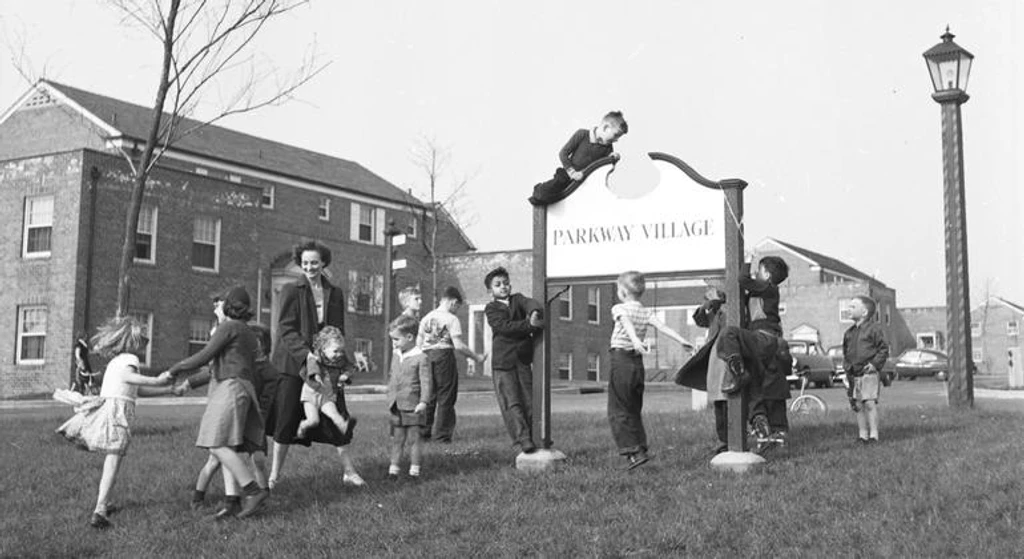
In the racially segregated United States of the 1940s, where “whites-only” housing was common and interracial marriage illegal, the United Nations took a bold stand. When it permanently located to New York in December 1946, the UN demanded non-discriminatory housing for its diverse staff-many of whom were barred from renting elsewhere in the city.
The result was Parkway Village: a 34-acre development in Queens built from scratch in 1947. It housed nearly 500 UN families from over 50 countries, including Nobel Peace Prize winner Ralph Bunche, the first Black laureate.
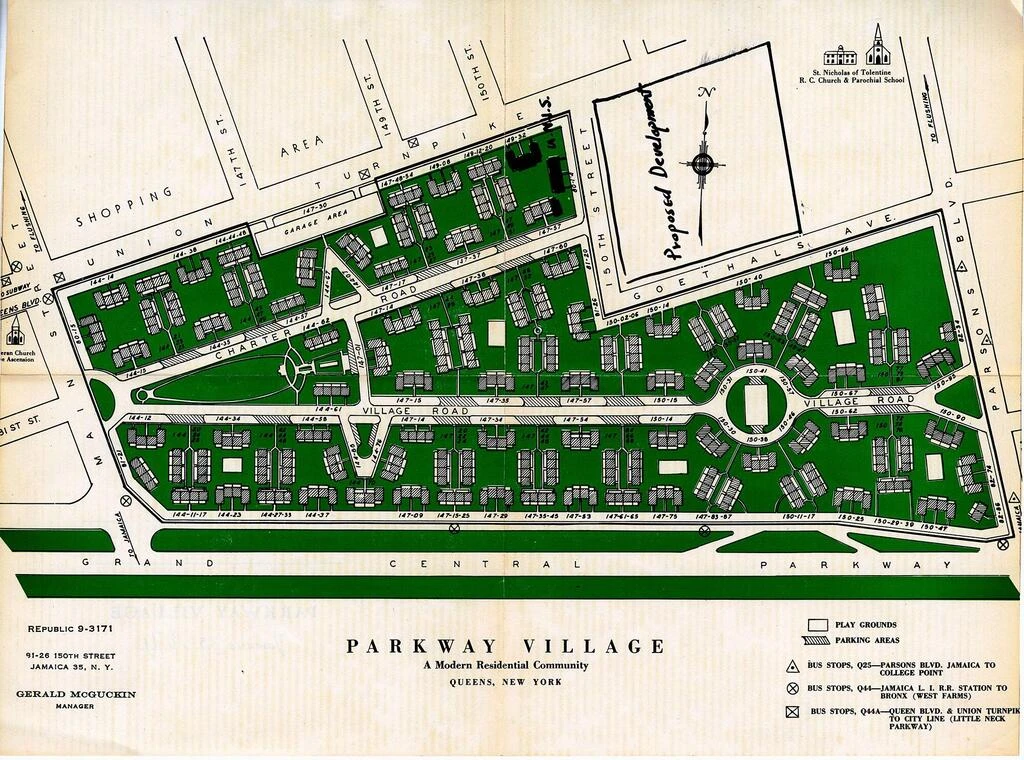
Residents recalled children from historically rival nations-Indians and Pakistanis, Arabs and Jews-playing together in what one called “an atmosphere of cooperation and understanding.” With on-site schools, open lawns, and no fences between homes, Parkway fostered a uniquely communal and multicultural environment.
At a time when Black Americans often couldn’t secure apartments in New York, Parkway Village stood as a physical rejection of segregation-and an early embodiment of the UN’s anti-racism principles.