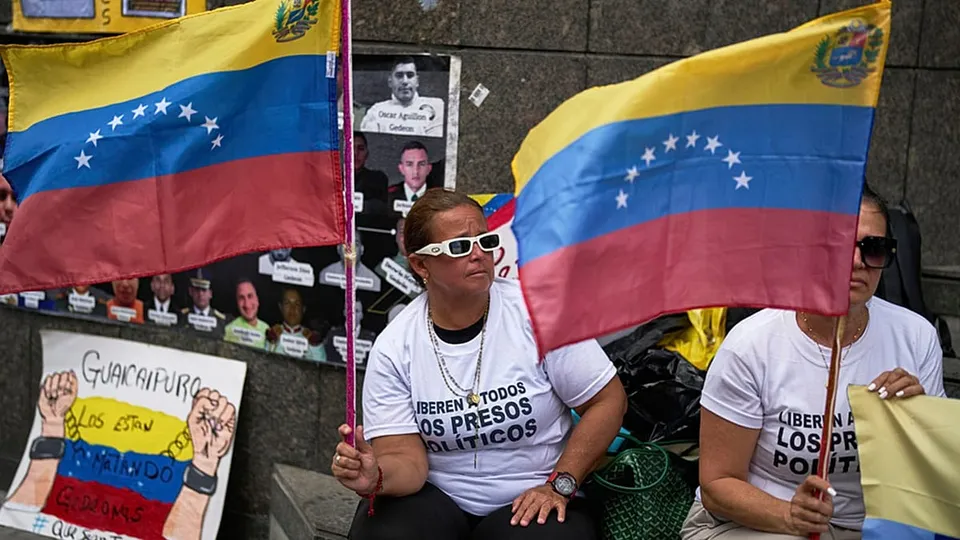
Venezuela's acting President Delcy Rodríguez has signed into law an amnesty bill, paving the way for the potential release of hundreds of political prisoners detained over the past 27 years. The move marks a significant policy reversal for a government that has long denied holding political prisoners.
Rodríguez, who proposed the bill last month, signed the measure shortly after its approval by the legislature. She stated the law signifies a move away from intolerance and towards opening new political avenues in Venezuela. This follows a previous announcement by Rodríguez's government to release a significant number of detainees after last month's capture of Nicolás Maduro.
Despite earlier promises, families of detainees have expressed frustration over the slow pace of releases and restrictive conditions for those freed. According to the Organization for the Rights of Prisoners in Venezuela, Foro Penal, 448 prisoners have been released since January 8, with over 600 still detained on political grounds.
The amnesty bill grants general amnesty for crimes committed since 1999 during periods of politically driven conflict. This includes "acts of politically motivated violence" surrounding the 2024 presidential election, which resulted in widespread protests and over 2,000 arrests.
Lawmakers overcame disagreements on including individuals who left the country to avoid detention, allowing lawyers to seek amnesty on their behalf. Those abroad filing for amnesty are shielded from arrest upon returning to Venezuela for court proceedings.
Opposition lawmaker Nora Bracho described the bill as a "great step forward for reconciliation," though she noted that individuals convicted of human rights violations, war crimes, murder, drug trafficking, and corruption do not qualify. The law also excludes those prosecuted for actions against Venezuela by foreign entities, a provision analysts suggest could impact opposition members who supported certain US policies.