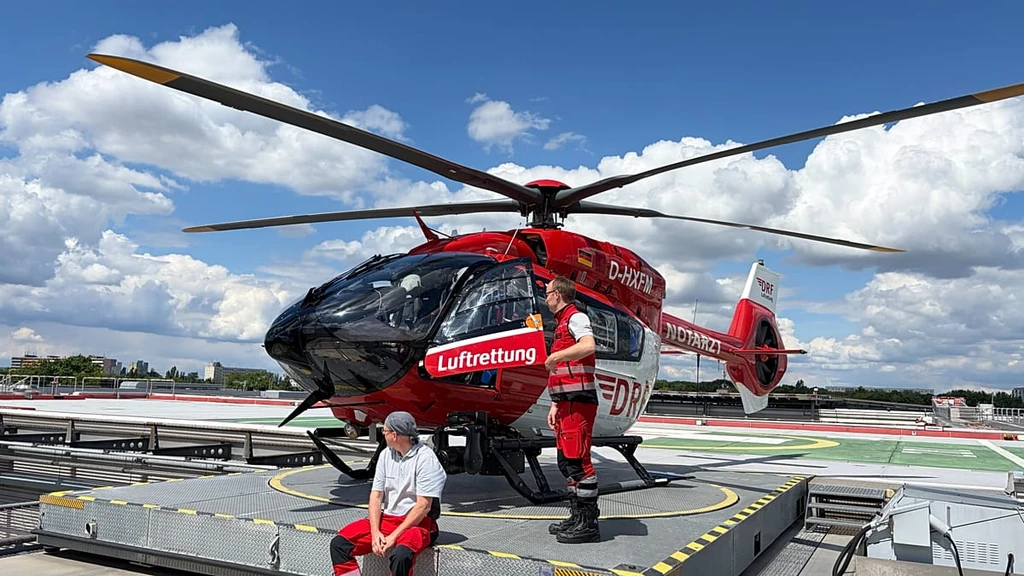
An emergency call comes in. Minutes later, an air ambulance lifts off from Berlin's Unfallkrankenhaus. On board, a pilot, an emergency doctor, and a paramedic form a well-rehearsed team for missions where precision and time are crucial.
Their destination: the town of Lübben. A patient with severe burns needs swift transport to a specialist center. "When an emergency call comes in, every moment counts," says emergency doctor Jan Martin. "With heart attack or stroke patients, tissue is lost with every minute."
Air rescue complements ground ambulances, especially where distances are long or specialized care is scarce. DRF Luftrettung operates 34 helicopter bases nationwide, including a 24-hour base in Berlin. A helicopter can cover 70 kilometers in about 17 minutes.
The Berlin "Christoph Berlin" handles two mission types: primary call-outs to accident scenes and secondary transfers between hospitals for specialized treatment. Crews work 13-hour shifts, demanding sustained concentration.
Modern medical technology, including blood and plasma supplies since November 2024, allows life-saving care to begin before hospital arrival. Personnel are highly specialized; emergency doctors require additional qualifications.
However, air rescue faces constraints. Low clouds, storms, or ground fog can ground flights. Not every location is a suitable landing site, and public cooperation is essential for safety.
Maintaining this standby system is expensive. A helicopter with equipment costs several million euros, consuming around 280 liters of kerosene per flight hour. False alarms and aborted missions also carry costs.
The sector is now alarmed by the planned "Law to Limit Health Insurance Costs," which could cap remuneration increases. Operators like DRF, ADAC, and Johanniter warn this would create a funding gap, straining a system becoming more important in specialized healthcare.
This debate is critical for rural regions, where air rescue can be the difference between life and death. "If this had been done by road, an emergency doctor would be out of the area for three to four hours," says paramedic Mathias Buchholz.
The Bundestag is due to vote on the savings package on July 10. For patients, the key question is not the cost of flight time, but being flown in time.