A simple waist-to-height ratio (WHtR) calculation may be a more accurate predictor of high blood pressure risk than the widely used body mass index (BMI), according to a new study. Researchers propose WHtR is more effective at identifying individuals at risk of elevated blood pressure and full hypertension.
While BMI has long been a screening tool, its accuracy is increasingly questioned. Obesity and high blood pressure are closely linked, making BMI potentially unreliable for predicting related cardiovascular issues stemming from excess body fat and hypertension.
"WHtR-based estimates of fat mass provide a more precise and clinically meaningful indicator of hypertension risk," stated epidemiologist Mahidere Ali from the University of Eastern Finland. He added that WHtR is a simple, scalable tool that can enhance early screening and improve the detection of adiposity-related cardiovascular risk.
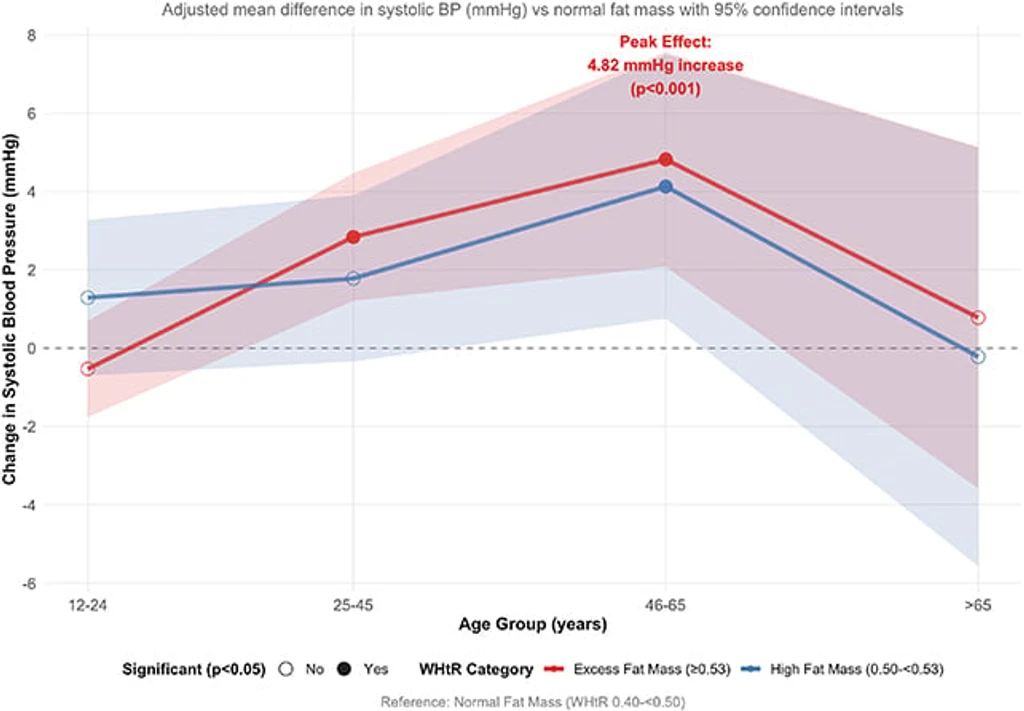
Categories for WHtR have been defined as normal fat, high fat, and excess fat. A data analysis of over 19,000 adults and children indicated these categories flagged elevated blood pressure and hypertension more effectively than BMI, particularly the "excess fat" category.
Individuals categorized with excess fat were 91 percent more likely to have elevated blood pressure and 161 percent more likely to be hypertensive compared to those at a normal level. For BMI, the association was weaker; overweight or obese individuals were more likely to have elevated blood pressure, but no such association was found for hypertension.
Unlike BMI, which measures weight relative to height without distinguishing fat from muscle mass, WHtR offers a key improvement. "BMI failed to detect the independent effect of adiposity, likely because it does not isolate the confounding influence of muscle mass," Ali explained. This distinction is crucial, as excess fat mass increases the risk of conditions like type 2 diabetes, while muscle mass can reduce it.
Previous studies have established WHtR's efficacy in predicting risks for type 2 diabetes and fatty liver disease. Although BMI remains the current standard, WHtR is presented as an inexpensive, universally accessible tool that could replace BMI in screening, prevention, diagnosis, and management of obesity and its cardiovascular consequences.