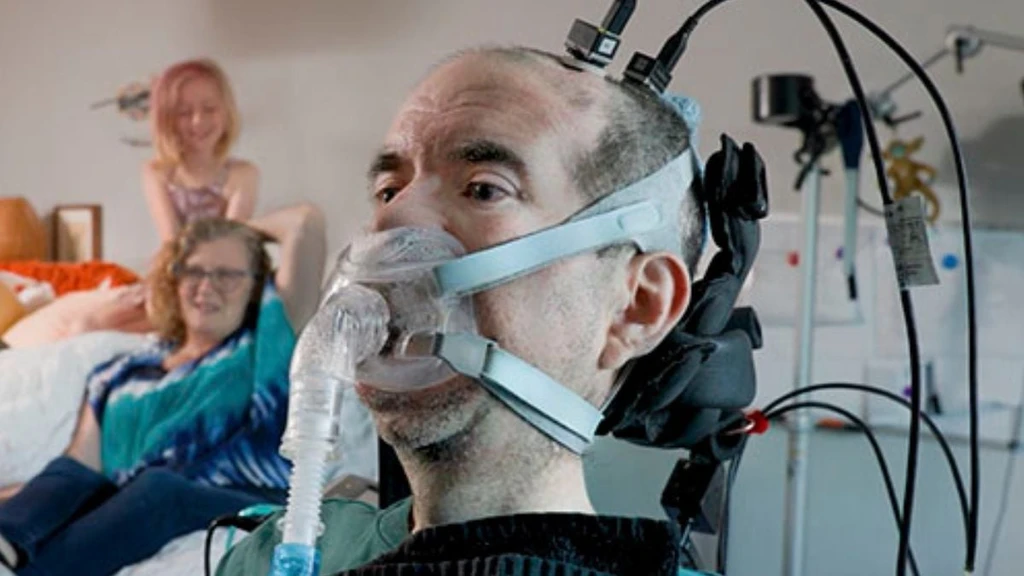
Casey Harrell, a 47-year-old with advanced amyotrophic lateral sclerosis, has regained the ability to communicate independently through an experimental brain implant. For nearly two years, this neuroprosthetic device has decoded his neural activity into speech, allowing him to express over 183,000 sentences and maintain full-time employment despite severe paralysis.
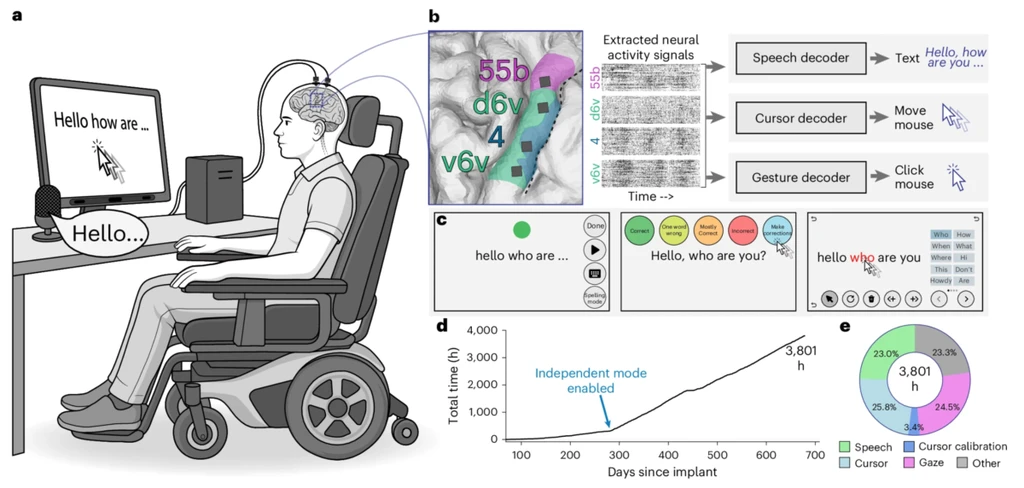
The system utilizes electrode arrays surgically placed in the brain to detect attempted speech signals. An external decoder translates these neurological patterns into text displayed on a screen in real time. Harrell navigates the interface using eye-gaze tracking and thought-controlled cursors. Crucially, the digital voice output was synthesized to resemble his pre-illness speech, restoring a deeply personal connection with his family.
Developed by UC Davis in collaboration with Brown University and Mass General Brigham, this technology represents a significant shift from controlled lab environments to practical home use. Harrell is a participant in the ongoing BrainGate 2 clinical trial led by neurosurgeon David Brandman. Researchers report he has accumulated the largest dataset in the trial, practicing over 3,800 hours across 400 days.
Performance metrics indicate substantial progress. Harrell now communicates at an average speed of 56 words per minute with 92% accuracy. The system includes a privacy mode, ensuring he retains control over when data is recorded for model training. Postdoctoral scholar Nicholas Card notes that Harrell frequently uses the device for up to 12 consecutive hours without researcher supervision.
These findings, published in Nature Medicine, suggest brain-computer interfaces have crossed a critical threshold for real-world viability. The independence afforded by this technology allows Harrell to engage dynamically with colleagues and loved ones. Researchers aim to leverage data from Harrell and 26 other trial participants to further refine neuroprosthetic communication systems for future patients.