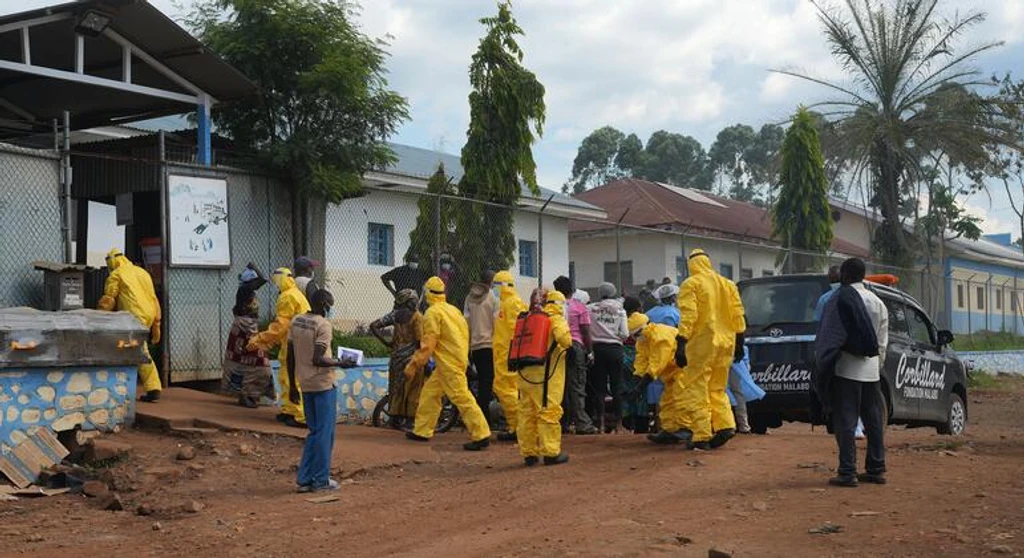
A massive push for early testing and contact tracing is helping contain the fast-moving Ebola outbreak in the eastern Democratic Republic of the Congo, according to the World Health Organization.
The outbreak, caused by the rare Bundibugyo strain, has also reached Uganda. As of June 8, the DRC has reported 550 confirmed cases and 101 deaths. Nineteen patients have recovered-a sign early identification saves lives.
Dr. Abdirahman Mahamud, WHO’s Health Emergency Alert and Response Operations Director, spoke from Bunia in Ituri Province, which accounts for 94% of cases. He attributed the rise in confirmed cases to expanded testing, including new labs in remote areas like Mongbwalu.
Uganda has reported 19 confirmed cases and two deaths, with no evidence of community transmission so far.
In the DRC, more than 5,000 contacts have been identified across Ituri, North Kivu, and South Kivu. Health workers have reached 62% of them, aiming for 90-95% in coming weeks. Dr. Mahamud stressed that building community trust and working with local healthcare workers are key to early detection and referral.
Challenges remain, especially in remote areas where samples may take hours to reach a lab. In Bunia, results come in one to two hours; in distant zones, up to 24 hours. A new lab in Aru, near the Ugandan border, will open Friday, cutting transport time from 10 hours.
WHO has set up field labs in five affected areas, deployed over 100 personnel, and delivered 40 tonnes of supplies to support government-led efforts.