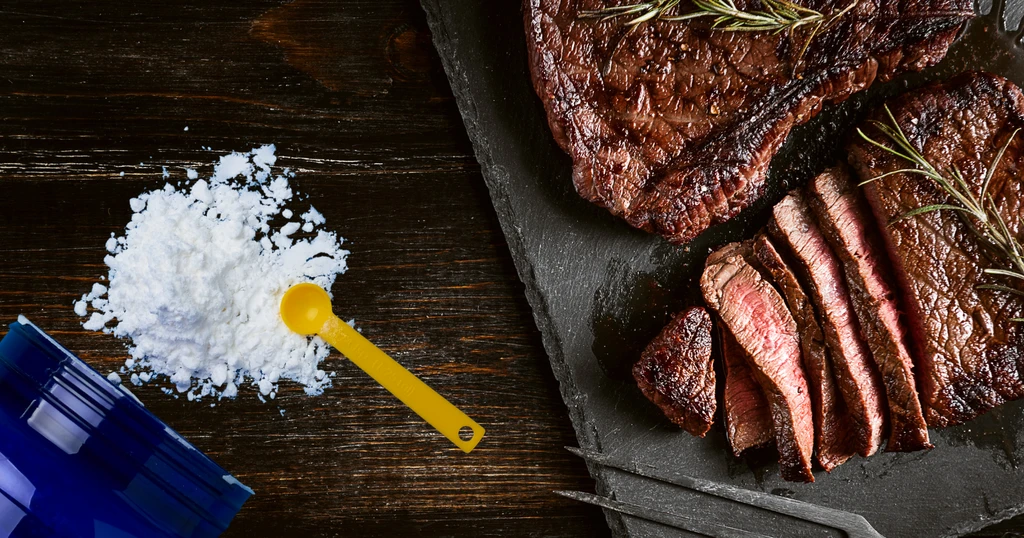
The fundamental arithmetic of creatine is stark. A single 5-gram supplement scoop provides the creatine found in roughly 1.5 kilograms of raw beef. That's a volume of meat virtually impossible to consume daily.
This fact underpins the entire supplement industry. While creatine is present in meat, the quantities are insufficient for meaningful dietary intake from food alone.
The body itself attempts to compensate. Your liver, kidneys, and pancreas synthesize about half the daily creatine requirement-roughly one to two grams-from amino acids. The other half is supposed to come from diet.
Most people fall short. Even dedicated meat-eaters maintain muscle creatine stores well below their physiological ceiling. The mismatch is clear: dietary supply cannot meet muscular demand for most individuals.

Herring is a rare exception among whole foods, offering up to 10 grams of creatine per kilogram. A 200-gram raw fillet delivers about 1.3 to 2 grams-closer to a maintenance dose than any practical beef portion.
This biochemical reality drives research into creatine's expanding benefits beyond athletics, including cognition, mood, and healthy aging. The effects are most pronounced in those starting furthest from saturation, such as vegetarians and older adults.
The evolution is clear. The human body evolved to tolerate a chronic creatine shortfall, not to maximize stores. Supplementation represents a modern intervention, closing a gap that the ancestral diet and contemporary food patterns cannot.