
A major analysis of the FRANCE-PCI registry has uncovered a significant evidence-practice gap in cardiac care. Despite clear guideline recommendations, the vast majority of patients at high bleeding risk (HBR) do not receive abbreviated dual antiplatelet therapy (DAPT) after percutaneous coronary intervention (PCI).
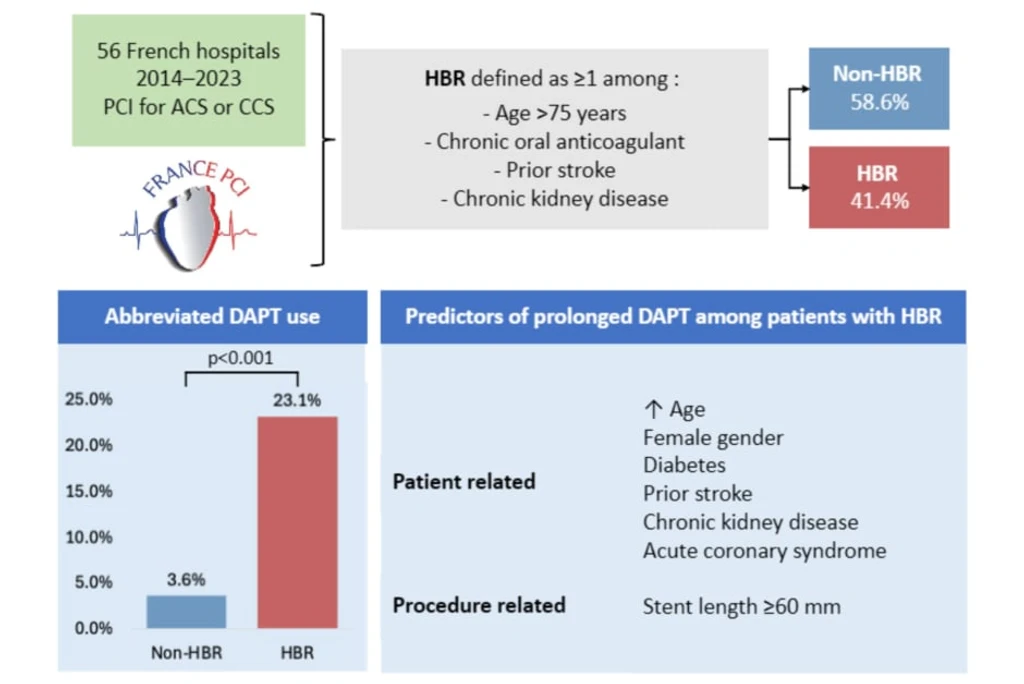
Researchers examined data from over 115,000 patients across 56 French centers between 2014 and 2023. They found that 41.4% of subjects met the criteria for high bleeding risk. In this vulnerable group, abbreviated DAPT-defined as three months or less-was prescribed to only 23.1% of patients.
Prolonged therapy remained the default strategy, driven heavily by complex procedural factors like acute coronary syndrome presentation and total stent length over 60 mm. The study noted that older age, female sex, diabetes, and prior stroke were independent predictors of longer DAPT use.
The analysis highlights a persistent clinical challenge. While physicians frequently prioritize preventing ischemic events, the data suggests an insufficient application of strategies designed to mitigate serious bleeding complications in high-risk populations.