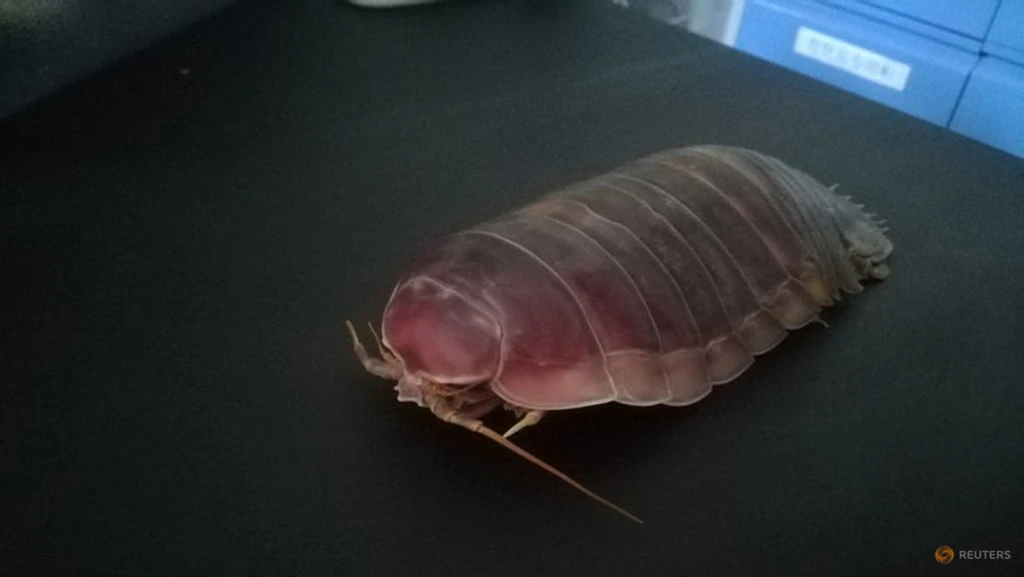
Deep-sea isopods have evolved a sophisticated biological strategy to survive more than five years without food in the ocean's most extreme environments. New research published in Cell identifies a combination of anatomical adaptations and rare genetic transfers that allow these crustaceans to thrive where resources are scarce.
Lead author Jianbo Yuan of the Institute of Oceanology describes this as an "earn more, spend less" survival mechanism. In supergiant species like Bathynomus jamesi, the stomach occupies two-thirds of the body cavity, functioning as a high-capacity storage unit. This anatomy allows the animal to consume massive meals during rare feeding events and enter a metabolic standby mode for extended periods.
Symbiotic bacteria also play a critical role. Researchers found Chlamydiae bacteria within the isopod gut linked directly to fat storage. Unlike their pathogenic counterparts in humans, these microbes provide slow-release energy to the host while securing a stable environment for themselves.
Most significantly, scientists identified horizontal gene transfer as a key evolutionary driver. The isopods appear to have integrated ND1, a gene originally from symbiotic bacteria, into their own genome. This genetic acquisition acts as a metabolic switch, fine-tuning energy production based on environmental temperature and resource availability.
Laboratory tests on zebrafish and human cells confirmed ND1 extends survival under starvation conditions. Experts suggest understanding these extreme adaptations offers valuable insights for medical science, robotics, and predicting ecosystem resilience amid global climate change.