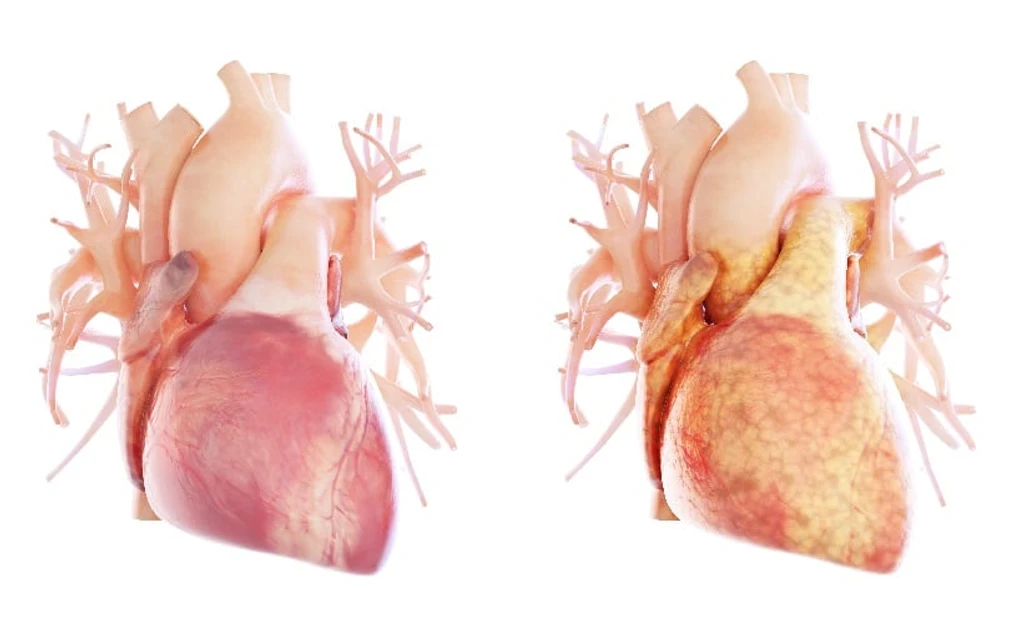
Epicardial adipose tissue (EAT) volume, measured by cardiac magnetic resonance imaging (MRI), can identify patients at higher risk for heart failure with preserved ejection fraction (HFpEF). HFpEF, characterized by impaired ventricular filling with normal ejection fraction, is a growing cause of heart failure.
Cardiac MRI-derived EAT volume shows promise as an imaging biomarker reflecting disease severity and prognosis. In a retrospective analysis of 117 HFpEF patients, 62 high-risk individuals, and 65 healthy controls, the EAT index increased progressively across groups. The EAT index demonstrated significant discriminatory performance, separating controls from high-risk individuals and those with HFpEF.
Multivariable modeling identified EAT index and left ventricular global longitudinal strain as independent indicators linked to HFpEF. Higher EAT index was also associated with an increased risk of heart failure readmission or all-cause mortality over a median of 31 months, suggesting a role in prognostic assessment.
These findings support integrating EAT volume assessment into routine cardiac MRI interpretation for patients with suspected or established HFpEF. Further research is needed to determine optimal clinical workflow integration and management guidance.