
Humans can develop the remarkable ability to 'see' with sound, a skill known as echolocation. Experts can use clicks or taps to create detailed mental maps of their surroundings, discerning not just location but also size, shape, and material. A recent experiment has provided the first detailed insight into how the brain achieves this.
The findings indicate the central nervous system continuously builds and refines its spatial understanding with each returning echo, integrating a symphony of sounds rather than relying on a single one. This process engages both auditory and visual pathways.
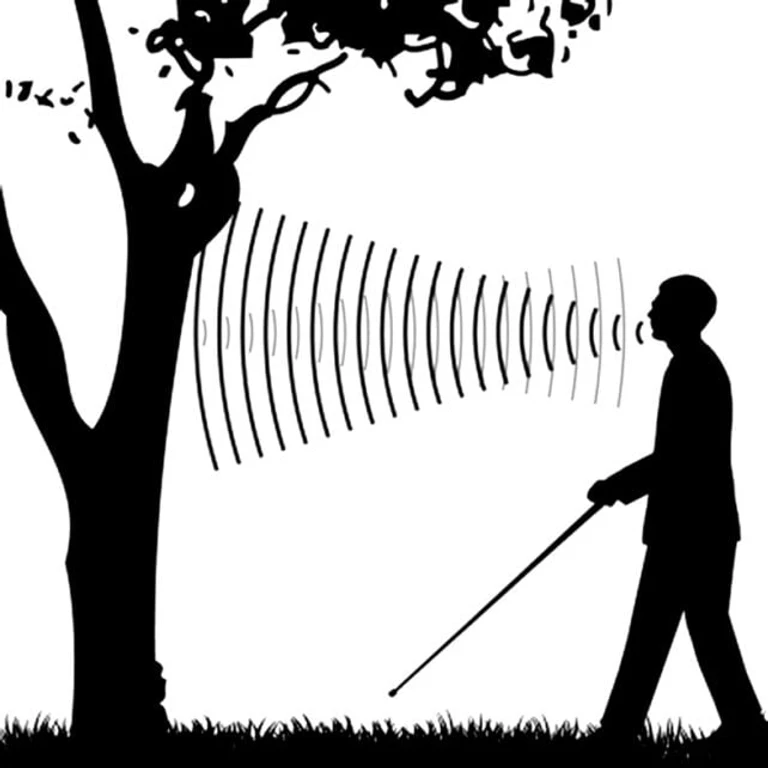
Researchers at the Smith-Kettlewell Eye Research Institute compared expert echolocators with sighted individuals lacking the skill. Participants, fitted with EEG caps, listened to clicking sounds and simulated echoes of virtual objects. Expert echolocators significantly outperformed novices in identifying object locations.
Individuals who became blind earlier in life demonstrated the highest proficiency, correctly locating objects with remarkable accuracy. This suggests early blindness may enhance sensitivity to acoustic spatial cues. The study highlights the brain's spatial networks activating rapidly with each echo, integrating information efficiently. This research underscores the brain's remarkable adaptability when vision is absent.