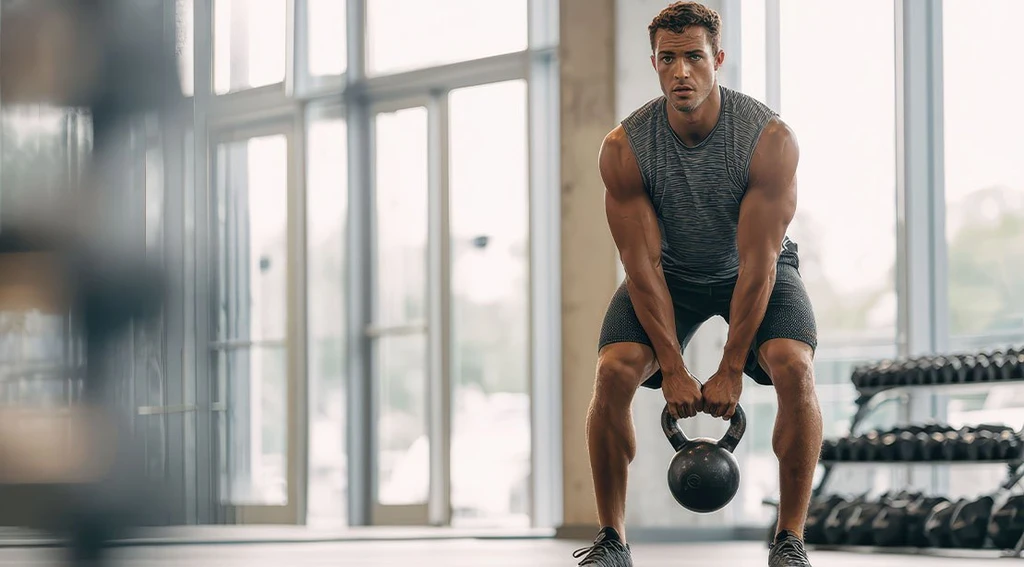
The hip hinge is the biomechanical foundation for deadlifts, kettlebell swings, and daily functional movements. Yet, many individuals confuse hinging with bending, inadvertently shifting load from the glutes and hamstrings to the lumbar spine. This mechanical error significantly increases injury risk during both athletic training and routine tasks.
Gareth Sapstead, founder of Team EPT Coaching, emphasizes that a proper hinge requires specific mobility and stability. Before adding load, athletes should assess their mechanics using the Wall Hip Hinge Test. Standing six inches from a wall, one must push hips back to touch the surface while maintaining a neutral spine and vertical shins. Failure to do so indicates deficits in hip flexion, hamstring tolerance, or lat engagement.
To address these deficiencies, Sapstead recommends the Band Sweeping Romanian Deadlift. Unlike standard mobility work, this drill uses anterior band tension to force lat engagement and trunk stiffness. This connection ensures effective force transfer between the upper and lower body, preventing the bar path from drifting during heavy lifts.
Hamstring and adductor mobility are equally critical. The Hamstring Rock-Back teaches the posterior chain to accept tension without lumbar compensation. Similarly, the Adductor Quadruped Rock-back restores inner hip mobility, allowing the pelvis to stabilize independently of the spine. Limited adductor function often forces the lower back to compensate, creating unnecessary stiffness.
For unilateral stability, the Single-Leg Wall-Supported RDL isolates each hip. The wall provides tactile feedback, reducing balance demands so the athlete can focus purely on pelvic control and hamstring loading. This drill effectively reveals and corrects side-to-side imbalances that bilateral movements often mask.
Finally, the Wall Hip Hinge with Dowel enforces strict spinal neutrality. By maintaining three points of contact between the dowel and the spine while tapping the wall with the glutes, athletes learn to dissociate hip movement from lumbar flexion. Mastering these five drills transforms the hinge from a liability into a powerful, safe engine for athletic performance.