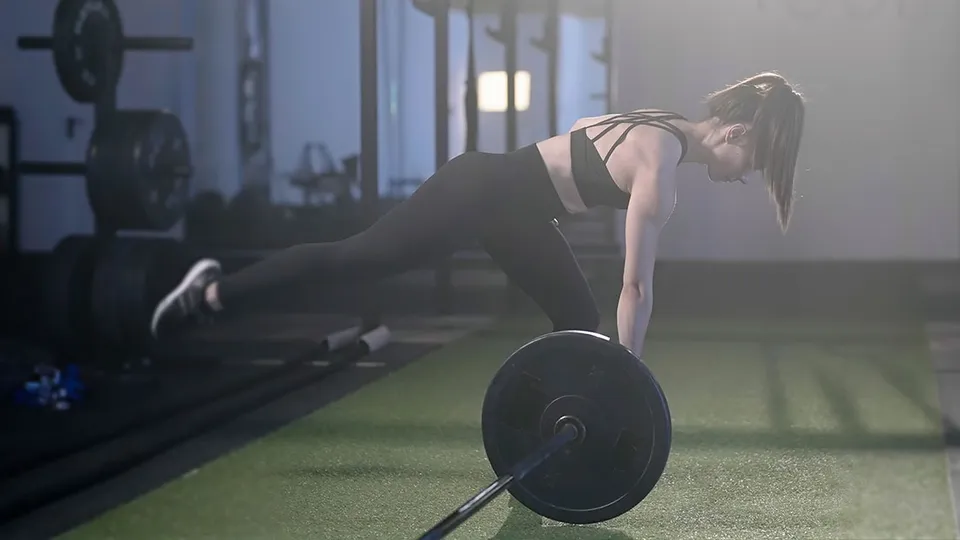
Unilateral exercises like the single-leg Romanian Deadlift (RDL) can reduce muscle imbalances and enhance development. However, maintaining balance often becomes the primary challenge over building muscle. The solution: assisted single-leg RDLs.
By holding a rack or wall for light support, balance is removed as a limiting factor, allowing you to focus on your glutes and hamstrings. This transforms a potential balancing act into a powerful strength movement that exposes asymmetries and builds posterior-chain durability.
This unilateral hip hinge is performed with light external support for stability, using a dumbbell or kettlebell in the hand opposite the working leg. This contralateral load increases hip stability and core engagement. The assisted version eliminates wobble, allowing for focused loading of the hips and hamstrings.
How to Perform:
- Stand side-on to a support (rack or wall) with a weight in the hand opposite your working leg.
- Lightly place your free hand on the support.
- Maintain a soft bend in the working knee and brace your core.
- Shift weight into the working foot and hinge at the hips, pushing them straight back.
- Let your non-working leg extend behind you as a counterbalance, keeping hips square and spine neutral.
- Lower until a strong hamstring stretch is felt.
- Drive through the foot and squeeze the glute to return to the start.
Common Mistakes and Fixes:
- Hips Rotating Open: Keep hips square, like headlights pointing at the floor. Reduce range of motion if needed.
- Rounding Lower Back: Maintain a long spine, "chest proud, ribs down." Hinge from the hips.
- Excessive Knee Bend: Keep a soft, fixed bend in the knee; push hips back, not down.
- Too Much Upper-Body Support: Use only light fingertip contact. The hand is for balance, not pulling.
Benefits:
- Exposes & Reduces Strength Imbalances: Each side must work independently, leading to better symmetry and mechanics.
- Trains The True Hip Hinge: Focus shifts to proper hinge mechanics, benefiting deadlifts and swings.
- Builds Hamstring Strength: Loads hamstrings in a stretched position, crucial for strength and injury resilience.
- Hip Stability Development: Improves pelvic levelness and lateral hip stability, essential for knee health and performance.