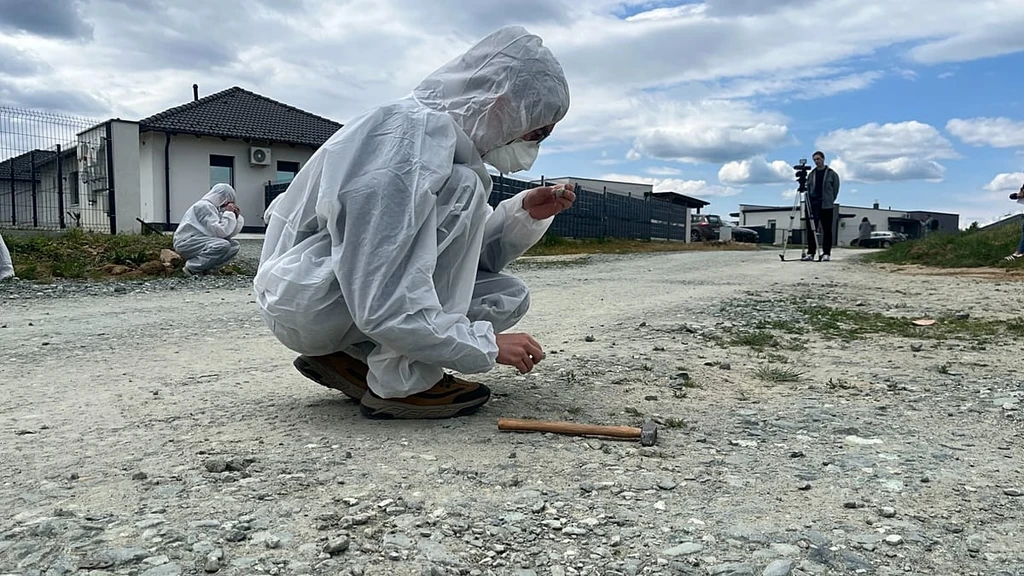
Hundreds of road surfaces in western Hungary may be contaminated with asbestos, particularly in the Oladi plateau of Szombathely, a suburb currently under construction. The contamination may have been present for eight to ten years, originating from stones transported from Austrian mines.
Tamás Weiszburg, a geologist and former head of the mineralogy department at Eötvös Loránd University, explained that asbestos is a fine fiber that can evade the body's defenses and cause cancer. It enters the airflow, travels into the bronchi, and because of its length, cannot be properly eliminated by phagocytes, leading to a permanent inflammatory state that can develop into cancer over time. Asbestos is a "slow killer," with tumors potentially developing decades after inhalation.
If properly sealed, asbestos-containing roads pose no harm. In western Hungarian counties, hundreds of kilometers of roads have been sealed and are safe. However, dismantling those roads without proper precautions could expose workers to risk.
Hungarian Environment Minister László Gajdos visited the Szombathely district on Thursday, an area inhabited mainly by families with young children. Mayor András Nemény reported that reducing car speed has limited dust, and the area is being constantly watered.
Gajdos confirmed that three counties are affected, but the government does not know the full extent of where stones from Austrian mines were taken. He stated he would submit the matter to the government on Monday for a rapid decision.
According to Weiszburg, the contamination may have occurred due to a legal gap: there are no preventive regulations in Europe concerning natural asbestos. He noted that one side of a mine might contain asbestos while the other does not, and a lack of knowledge and regulation contributed to the issue.
So far, contamination has been identified at more than 300 sites in three counties, including Szombathely, Sopron, and Kőszeg, where surfaces were covered with gravel containing natural asbestos.