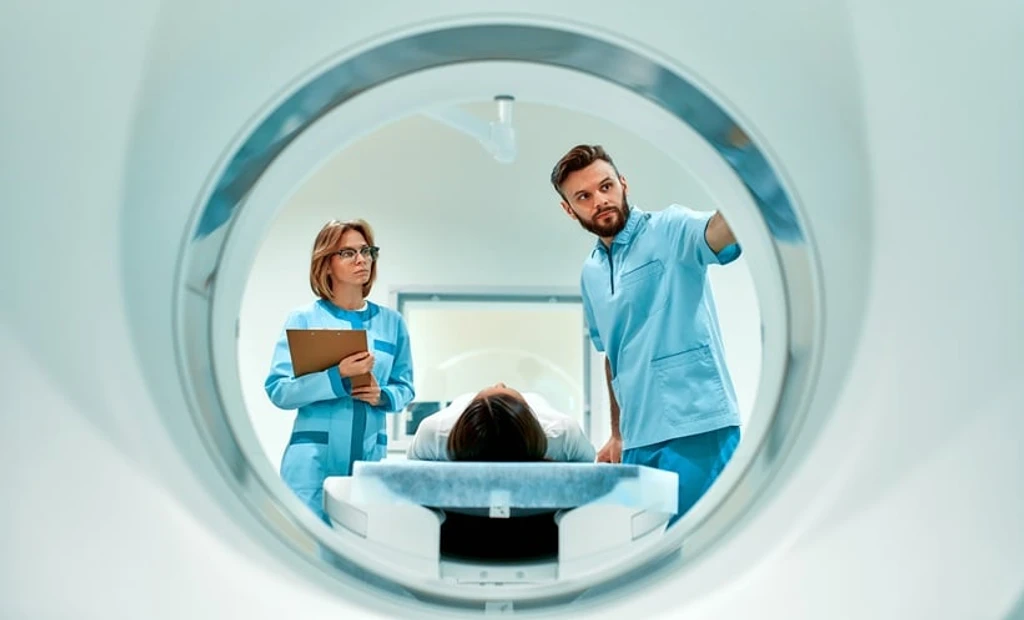
A novel interpretable magnetic resonance imaging workflow now enables non-invasive assessment of the tumor microenvironment, a key factor in cancer prognosis and immunotherapy response. Traditionally, mapping this cellular landscape required invasive pathology sampling, which can miss tumor heterogeneity. This new approach deconvolutes bulk molecular data to infer a tumor microenvironment profile, then aligns it with imaging features to produce unsupervised, biologically-enriched lesion annotations.
The workflow uses interpretable modules linking gene expression and imaging data to identify clinically meaningful biomarkers. Radiomic features derived from MRI achieved an accuracy of 0.87 in estimating the proportion of cancer-associated fibroblasts. The analysis also revealed an inverse relationship between cancer-associated fibroblasts and T cell infiltration in triple negative breast cancer, shedding light on tumor immune dynamics.
Across multiple datasets, the deconvolution method outperformed existing baselines, demonstrating improved robustness. Radiomic features for tumor subtyping showed consistent distributions among breast cancer patients, with an average accuracy exceeding 0.8 across five multicenter validations.
This interpretable radiogenomics approach offers a scalable, non-invasive strategy for patient stratification and more precise therapeutic selection, particularly in complex cancers like triple negative breast cancer.