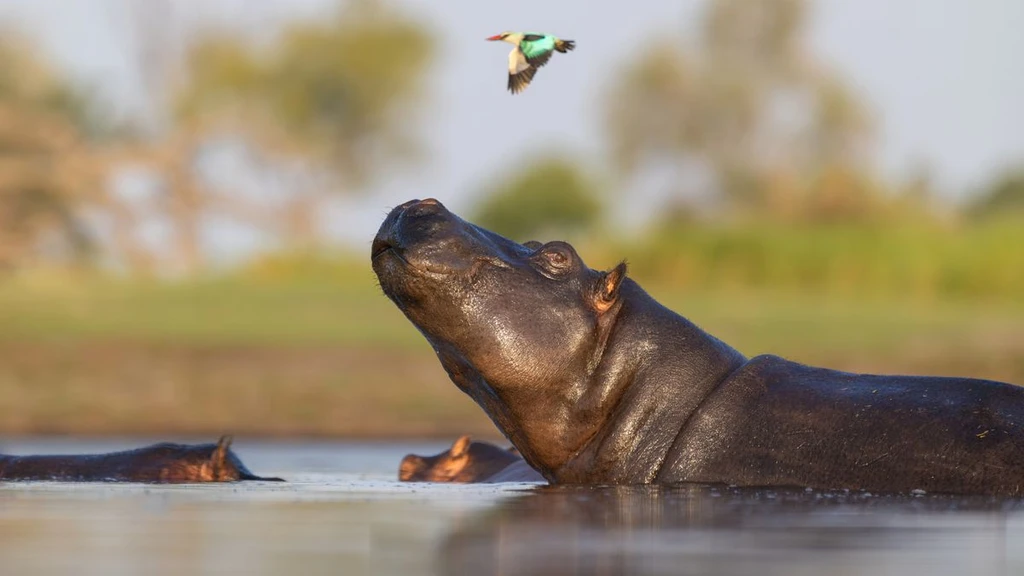
Mammals generally display a limited color palette of browns, blacks, and whites, unlike the vivid colors seen in birds, reptiles, and fish. This difference stems from how animals express color: through pigments or structural coloration. Mammals primarily rely on melanin, a single pigment type, which accounts for their limited color range and the absence of vibrant hues.
The structure of mammalian fur also limits the potential for structural colors, which depend on nanoscale patterns. While some mammals like mandrills exhibit bright colors, these are typically on fur-less skin. Sloths may appear green due to algae, not intrinsic coloration.
Evolutionarily, mammals evolved as nocturnal prey during the age of dinosaurs, favoring darker colors for camouflage. Even after the dinosaurs' extinction, this trait persisted. Most mammals retain dichromatic vision, limiting their perception of certain colors, unlike the trichromatic vision of humans and primates.
Instead of vibrant colors, many mammals use patterns and contrasting colors for communication and camouflage. While bright colors are rare, recent discoveries reveal fluorescence and iridescence in some mammal species, suggesting further mysteries in mammalian coloration.