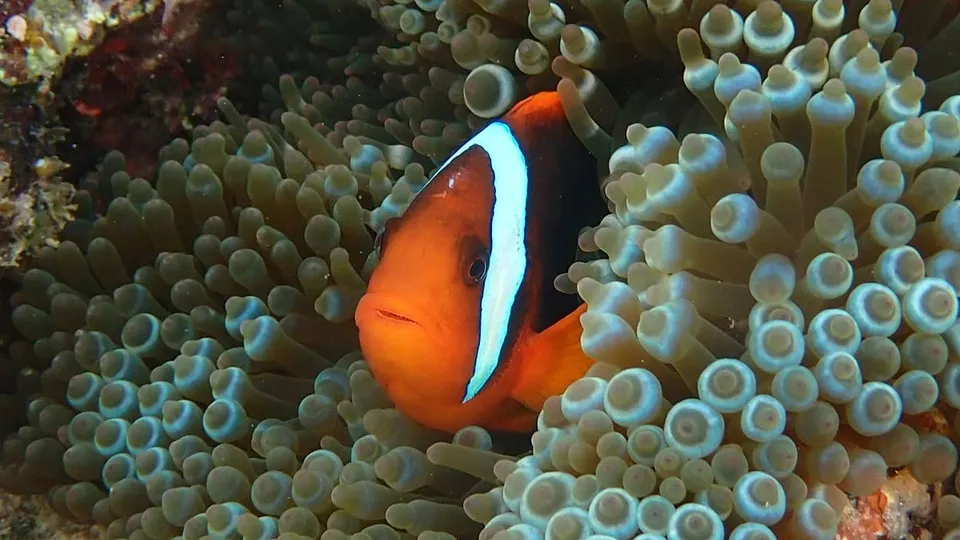
Baby clownfish are shedding their distinctive white stripes at an accelerated rate when in the presence of older, dominant fish. This behavior, observed in tomato anemonefish, is a crucial adaptation for establishing social hierarchy within their strictly structured environment.
Typically, clownfish species feature one or two additional white stripes as juveniles, signaling their subordinate status. These stripes are vital for communication and recognition among individuals. However, in species inhabiting smaller groups, these bars are lost during the transition to adulthood. This suggests visual markers of status are important for survival, potentially reducing dangerous conflicts arising from pronounced size differences.
A new study from the Okinawa Institute of Science and Technology (OIST) observed juvenile clownfish in anemones with adults, compared to empty or artificial anemones. Researchers were surprised to find that the presence of adults significantly sped up the loss of these extra stripes, a trait usually indicative of lower rank.
Scientists theorize that juvenile clownfish may initially retain their 'baby stripes' to appear less threatening to established adults. However, to cement their position and prepare for potential new rivals, they actively accelerate the loss of these stripes. In unoccupied anemones, juveniles kept their extra stripes longer, possibly as a safeguard against future territorial disputes.
The loss of these white stripes, composed of specialized light-reflecting iridophore cells, involves programmed cell death. The cells shrink and fragment, leading to their replacement by the fish's characteristic orange skin. This research highlights how developmental flexibility in color patterns allows marine life to adapt to unpredictable environmental conditions and underscores the complex biological meaning behind seemingly simple visual markers.