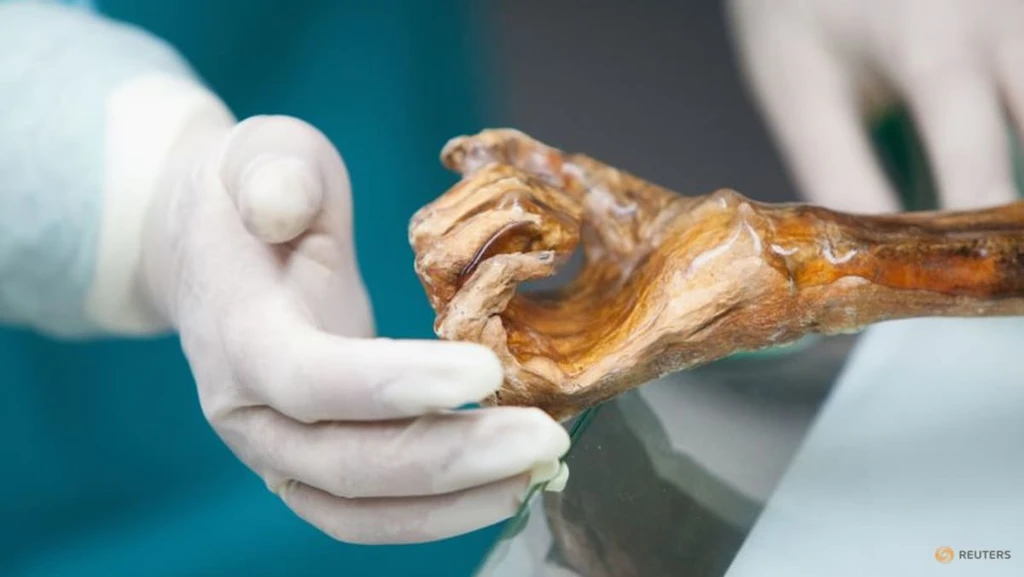
Ötzi the Iceman, discovered in 1991 in the Alps, died violently 5,300 years ago with an arrowhead lodged in his shoulder. But new research shows his body is far from inert-it hosts a dynamic microbial world.
Scientists have conducted the most comprehensive analysis of Ötzi’s microbial landscape, identifying three distinct communities: ancient gut bacteria from his lifetime, cold-adapted organisms from the glacier, and modern microbes introduced during museum conservation.
“Ötzi is not a static relic-he is a dynamic ecosystem,” said microbiologist Mohamed Sarhan of Eurac Research. “Cold-adapted yeasts are growing, and bacteria have colonized his tissues for decades.”
The ancient gut bacteria offer a rare window into a Copper Age microbiome, before industrialization and antibiotics. “Ötzi shows us what we have lost and what we might restore for health reasons,” Sarhan added.
Cold-loving yeasts are actively growing on Ötzi, preserved at 21°F (-6°C) at the South Tyrol Museum of Archaeology, raising questions about long-term integrity. The study also found that spray water used for humidity introduced modern bacteria, reshaping his external microbiome.
Ötzi’s last meals-deer, goat meat, and wheat-were previously identified. He was about 45, physically robust, and carried a copper ax and longbow. This new research underscores his role as a living biological interface between the ancient and present worlds.