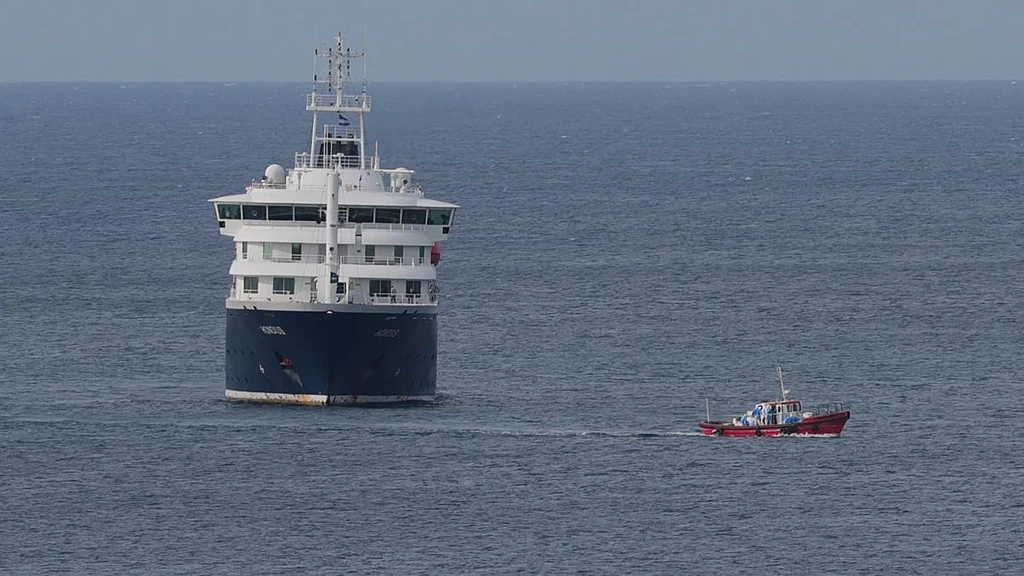
Dutch authorities have confirmed that approximately 40 passengers disembarked from the MV Hondius cruise ship following the first death in a hantavirus outbreak. The passengers left the vessel during a stop at the remote South Atlantic island of St. Helena, according to the Dutch foreign ministry. Among them was the wife of a 70-year-old Dutch passenger who died onboard. She later collapsed and died at a hospital in South Africa after taking a commercial flight.
The cruise operator, Oceanwide Expeditions, had only previously confirmed that the woman left the ship with her husband's body, but did not disclose that dozens of others also disembarked. The current whereabouts of those passengers have not been disclosed.
Three passengers have died and eight have been sickened by hantavirus on the Dutch-flagged MV Hondius, which remains marooned off Cape Verde with nearly 150 people still onboard. The ship departed Argentina on April 1 for an Atlantic cruise that included stops in Antarctica and the Falkland Islands, though its itinerary has been altered due to the outbreak.
The World Health Organization (WHO) said three suspected hantavirus patients have been evacuated to the Netherlands. WHO officials are investigating possible human-to-human transmission, which is considered extremely rare. Authorities believe the first infected person likely contracted the virus before boarding and have confirmed there are no rats on the ship.
A case linked to the ship has been confirmed in Switzerland, and health authorities in South Africa and Switzerland have identified a strain capable of spreading between humans in rare cases.
Hantavirus is primarily transmitted through inhalation of airborne particles from dried rodent droppings. It can cause hantavirus pulmonary syndrome, leading to severe respiratory failure, or hemorrhagic fever with renal syndrome, affecting the kidneys.