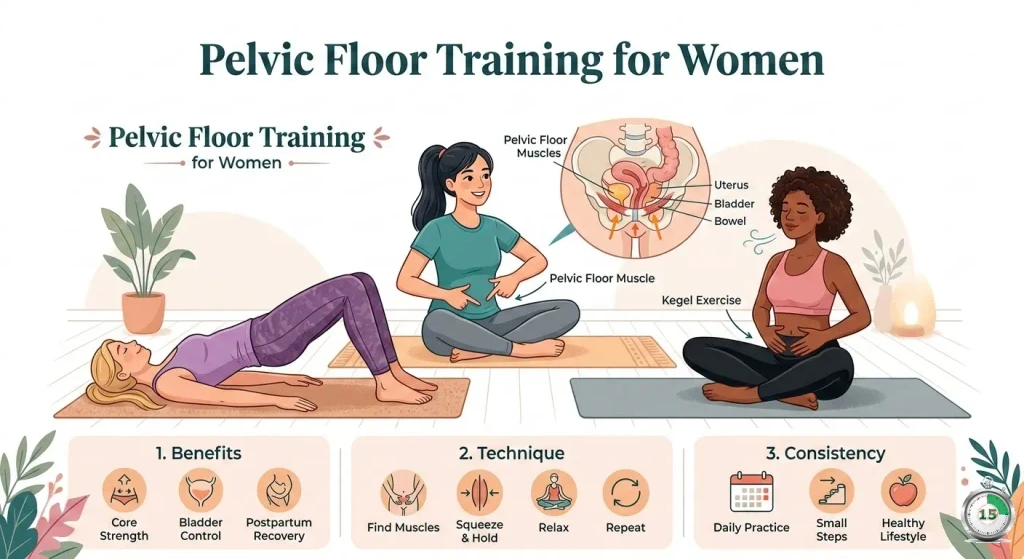
The pelvic floor, a critical group of muscles at the base of the pelvis, plays a vital role in bladder control, core stability, and sexual function. Often overlooked, these muscles endure significant stress from pregnancy, childbirth, hormonal changes, and high-impact exercise.
Essential exercises for pelvic floor health include Kegels, which involve contracting and releasing the muscles used to stop urination. Aim for 3 sets of 10 repetitions daily. Glute bridges engage the pelvic floor, glutes, and hamstrings. Lie on your back, engage your pelvic floor, and lift your hips. Controlled squats also strengthen the entire pelvic region, requiring core and pelvic floor activation during the movement. Pelvic tilts, performed by lying on your back and flattening your lower back against the floor, activate the deep core and pelvic floor.
While exercise is foundational, persistent issues like laxity, dryness, or sensitivity may require clinical support. Pelvic floor physical therapy offers guided training and individualized protocols. Non-surgical options, such as radiofrequency and laser treatments, can also address tissue tone and lubrication.
Experts emphasize that preventive training is more effective than rehabilitation. The American Urogynecologic Society recommends pelvic floor muscle training as a first-line treatment for stress urinary incontinence. If symptoms persist after 8-12 weeks of consistent training, consulting a specialist is advisable.