
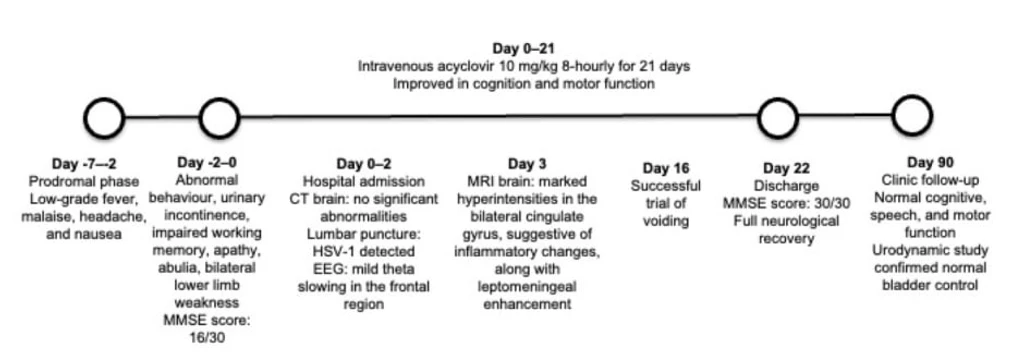
A 65-year-old woman presented with a 2-day history of abnormal behavior, urinary incontinence, and limb weakness. She exhibited apathy, abulia, and speech difficulties, scoring 16/30 on a Mini-Mental State Examination.
Unlike classic Herpes Simplex Encephalitis (HSE) which targets the temporal lobes, MRI revealed marked hyperintensities in the bilateral cingulate gyrus, with no significant changes in the mesial temporal lobe.
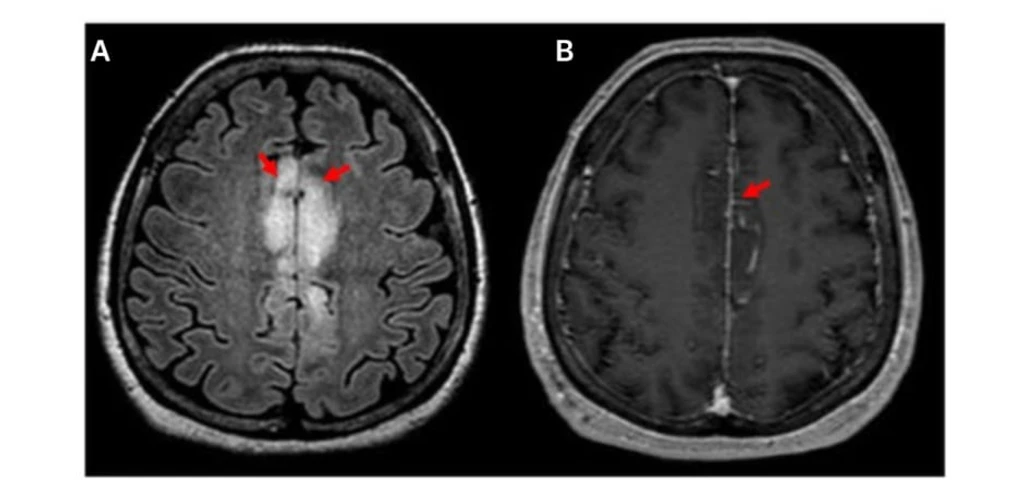
Lumbar puncture confirmed the diagnosis of HSV Type 1. The infection impacted the medial frontal circuit responsible for motivation, executive function, and bladder control.
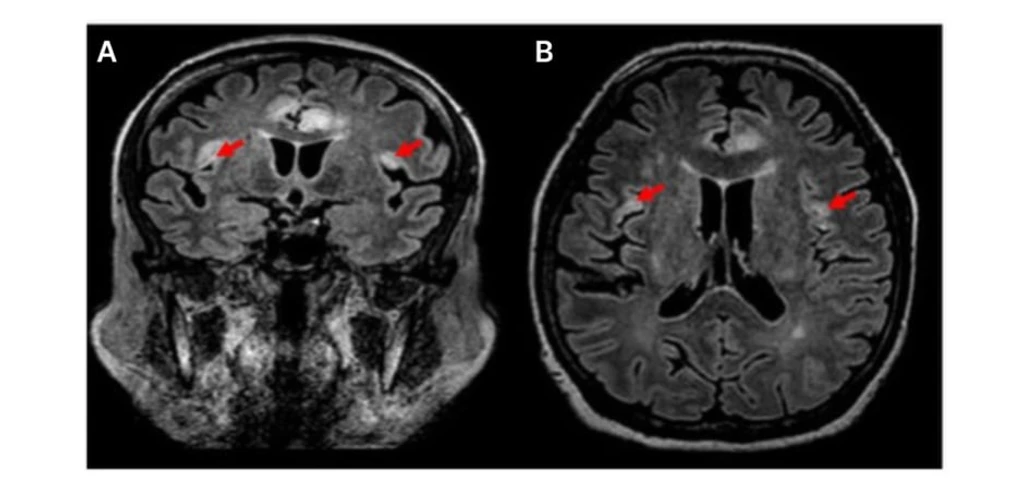
The patient was treated with intravenous acyclovir for 21 days. Recovery was complete; by day 16, bladder function returned, and cognitive scores normalized to 30/30. A three-month follow-up confirmed full restoration of neurological function and daily activities.
The case highlights that frontal lobe dysfunction, including behavioral changes and incontinence, can be a reversible presentation of HSE when early antiviral therapy is initiated.