The gluteal muscles, often admired for aesthetics, are increasingly recognized by experts as vital for health and longevity. As the body's largest muscles, they are directly linked to stability, balance, and healthy aging.
Strong glutes act as shock absorbers during movement, like walking or climbing stairs. Building them can help prevent and manage back pain and significantly reduce the risk of falls in older adults. "Glutes are so important" for maintaining independence, enabling everyday actions like getting off the subway or rising from a toilet.
Prolonged sitting weakens glutes, leading to "dead butt syndrome." Neglecting these muscles, particularly for older individuals, is a common oversight. When glutes are weak, other muscles overcompensate, potentially causing strains and joint pain.
The glutes, composed of the gluteus maximus, medius, and minimus, work together for essential movements and pelvic stabilization. They are part of the posterior chain, running from the heel to the neck. Weak glutes can impact confidence in movement and increase fall risk, as good lower body strength is key to staying upright.
Signs of weak glutes include hip sway, a waddling gait, slouching, or pain in the hips, knees, or lower back. Difficulty rising from a chair without arm support, squatting, or climbing stairs unaided can also indicate weakness. Relying heavily on handrails or leaning forward on stairs are further indicators.
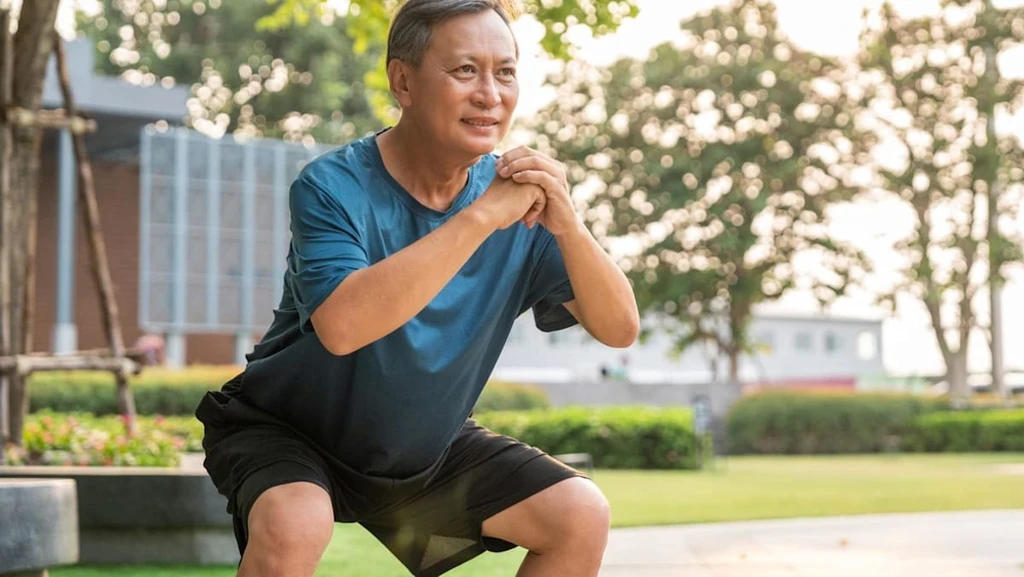
Building strong, functional glutes involves exercises that mimic everyday movements and engage them with supporting muscles like hamstrings and quads. Effective exercises include glute bridges, hip thrusts, squats, and deadlifts. For targeted strengthening, exercises like clamshells, glute kickbacks, and step-ups are beneficial.
Simple daily activities can also strengthen glutes. Standing at a stove can incorporate side or back leg kicks, and practicing standing on one leg improves balance. Even walking backward, especially uphill, engages the glutes more intensely.