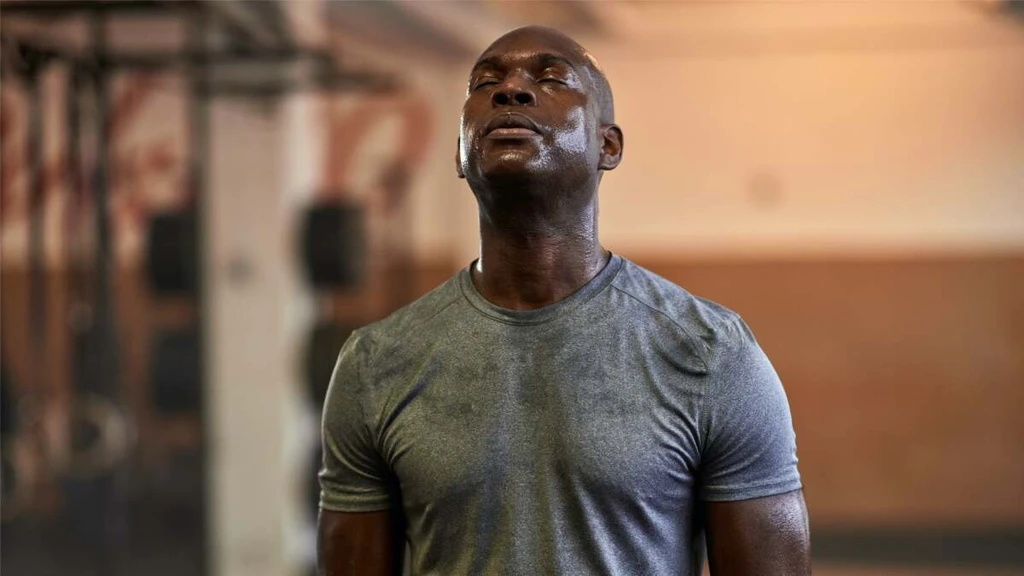
Sweat is your body's natural cooling mechanism, releasing moisture to regulate core temperature. While exercise raises body heat, leading to sweat, the amount you sweat is not a direct indicator of workout intensity, fitness, or weight loss.
Factors like ambient temperature significantly impact sweat production. Exercising in the cold will result in less sweat than the same workout in the heat. Similarly, strength training with rest periods may not induce as much sweat as an aerobic activity, despite being equally intense.
Individual differences also play a role. Body size, surface-area-to-volume ratio, and fitness level all influence how much a person sweats. Fitter individuals, for instance, may sweat more and sooner as their bodies are better adapted to cooling. This can indicate improved fitness, not a lack thereof.
Sweating heavily during exercise does not lead to fat loss. The weight lost through sweat is temporary water loss, which is easily replenished by hydration. True weight loss involves a reduction in body fat, independent of sweat production.