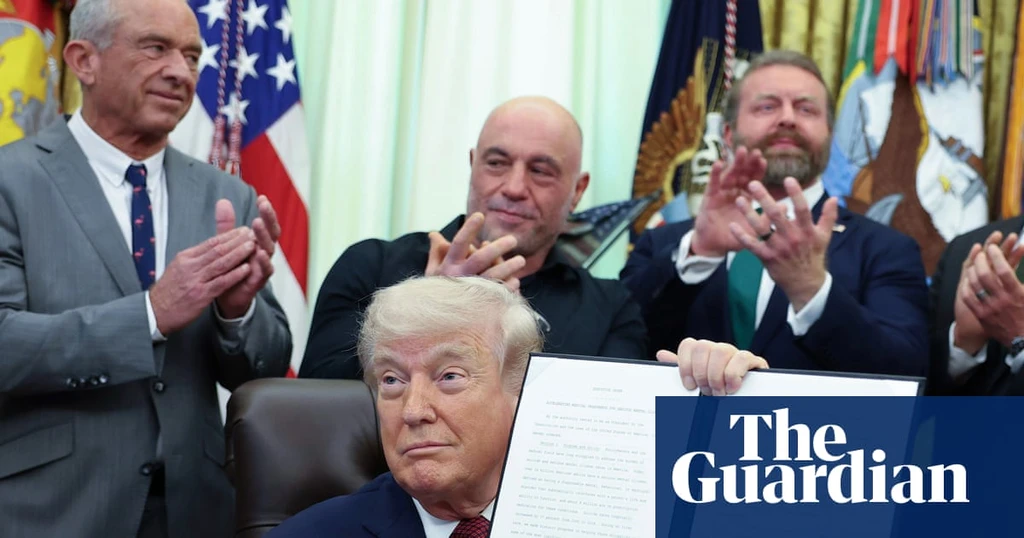
An executive order by the Trump administration to expedite access to psychedelic medications for serious mental illnesses is being met with skepticism from analysts who view it as largely symbolic. While the order outlines provisions for inter-agency collaboration and data sharing with the Department of Veterans Affairs, its concrete impact is expected to be minimal.
Experts suggest the order's primary significance lies in its symbolic value, with unusual public promotion by the former president. This includes notable figures like podcaster Joe Rogan and former Navy SEAL Marcus Luttrell participating in press events. This public endorsement signals a growing Republican interest in psychedelic research, influenced by advocates and public figures close to the administration.
However, concerns remain that the administration's focus on a medicalized, veteran-centered framework could overshadow broader public health needs. Critics argue that without sustained investment in healthcare access, community-based treatment, and housing - areas where funding has been reduced - the mental health crisis cannot be effectively addressed.
This initiative follows a similar, though less advanced, executive order concerning cannabis rescheduling. Analysts note differences between the two, with the psychedelics order featuring more direct directives for research funding. The pharmaceutical industry, particularly the FDA, shows a strong openness to psychedelics, with potential approvals for drugs treating conditions like treatment-resistant depression anticipated within one to three years.
Some provisions within the order, such as expediting the rescheduling of drugs completing phase 3 trials, appear redundant as such processes are already mandated. Concerns have also been raised about the potential for AI-driven safety reviews to overlook adverse events, potentially risking drug recalls and setbacks in the field. Experts emphasize that while psychedelics show promise, they are not a universal cure and require rigorous evidence, strong patient protections, and a comprehensive public health approach.