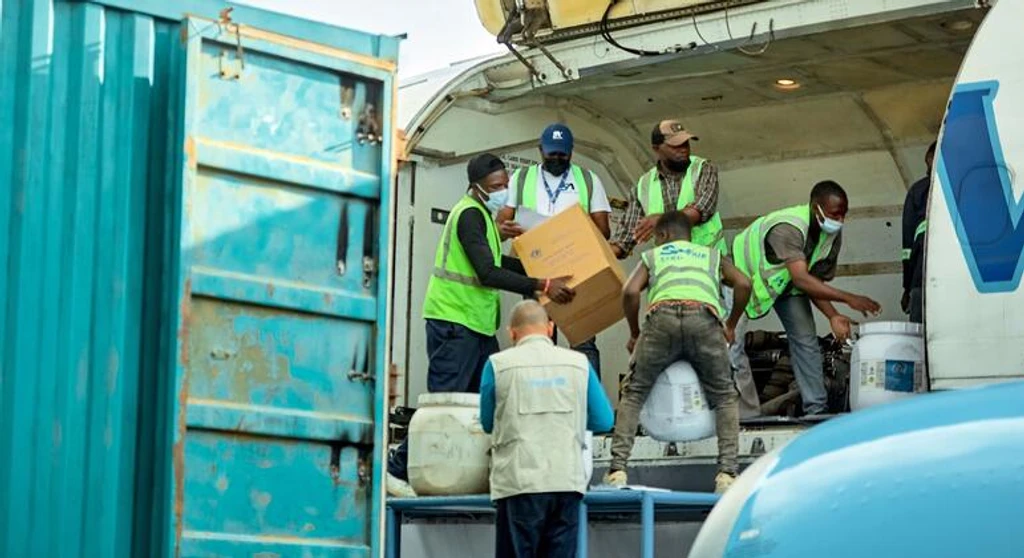
UN aid workers have been on the job since the outbreak was declared on 15 May in Ituri province in eastern DRC. The World Health Organization delivered 11.5 tonnes of medical supplies and equipment from Kinshasa, Dakar, and Nairobi within 72 hours.
The supplies included personal protective equipment, medical kits, and tents.
The UN peacekeeping mission, MONUSCO, quickly deployed its air assets to support authorities and UN agencies. Starting on Sunday, MONUSCO established an “air bridge” to transport WHO emergency supplies from Nairobi to Bunia, capital of Ituri province. By Wednesday, the mission had airlifted nearly 30 tonnes of supplies.
MONUSCO’s peacekeepers are conducting community awareness campaigns, using loudspeakers to stress handwashing, proper use of protective gear, and recognizing Ebola symptoms.
The outbreak is compounding a severe hunger crisis. The World Food Programme said 26.5 million people nationwide are facing acute food insecurity, including 10 million in Ituri and three other eastern provinces.
WFP is providing logistics support and food assistance. The agency needs over $214 million to support operations in the DRC, and over $10 million specifically for Ebola response.
UNICEF has voiced concern for children, who are especially vulnerable to the impacts of Ebola outbreaks. UNICEF has mobilized nearly 50 tonnes of supplies.
The DRC has battled Ebola 17 times since the virus was first discovered 50 years ago. The latest outbreak was caused by the rare Bundibugyo strain, with no vaccines or medicines currently available. To date, there have been 139 deaths and some 600 suspected cases in the DRC, while Uganda has confirmed two cases.