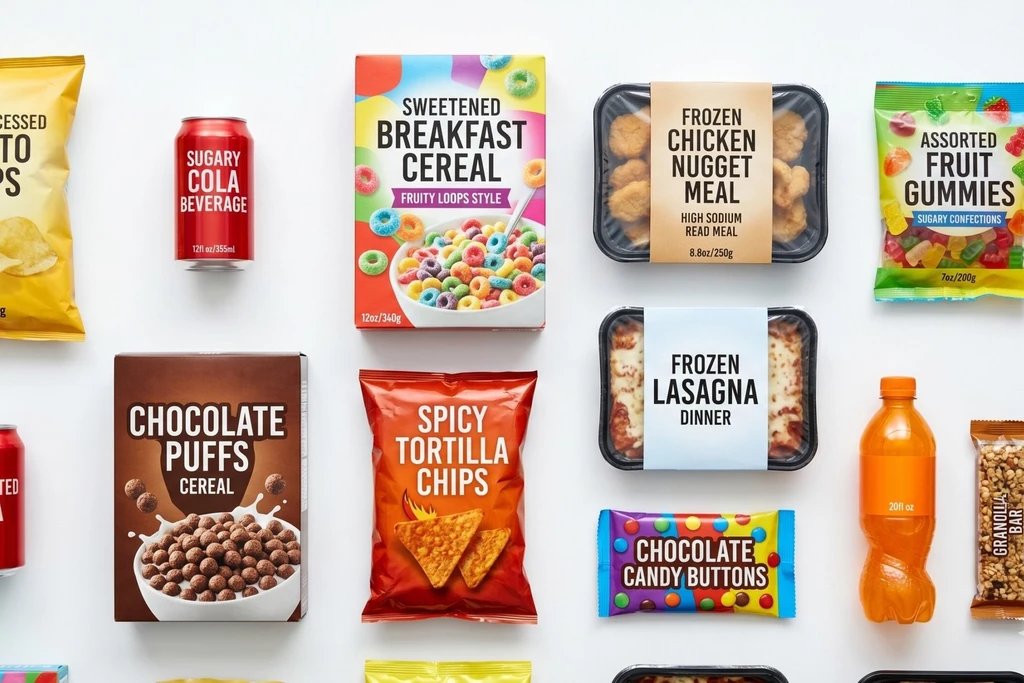
A new study from Harvard’s T.H. Chan School of Public Health reveals a stark warning for American eaters: adults who consume the highest amounts of ultraprocessed foods face a 58% higher risk of developing dementia.
Published in the American Journal of Public Health, the research also found a 46% higher risk of cognitive impairment among the same group. Lead author Cindy Leung noted the protective effect of whole foods like grains, fruits, and vegetables.
Currently, 53% of American adults get most of their daily calories from ultraprocessed food; that figure jumps to 62% for children. A separate study published the same day argues that food companies engineer these products to be chemically addictive, with over 12% of older Americans now clinically addicted.
Public sentiment is shifting. A companion survey found that 77% of Americans support mandatory warning labels on ultraprocessed foods, and 87% want government safety testing for chemical additives.
Despite this, political action is slow. The food industry spent $1.15 billion on federal lobbying between 1999 and 2020. The key takeaway? Cutting out ultraprocessed foods may not only protect your brain but also save you money.