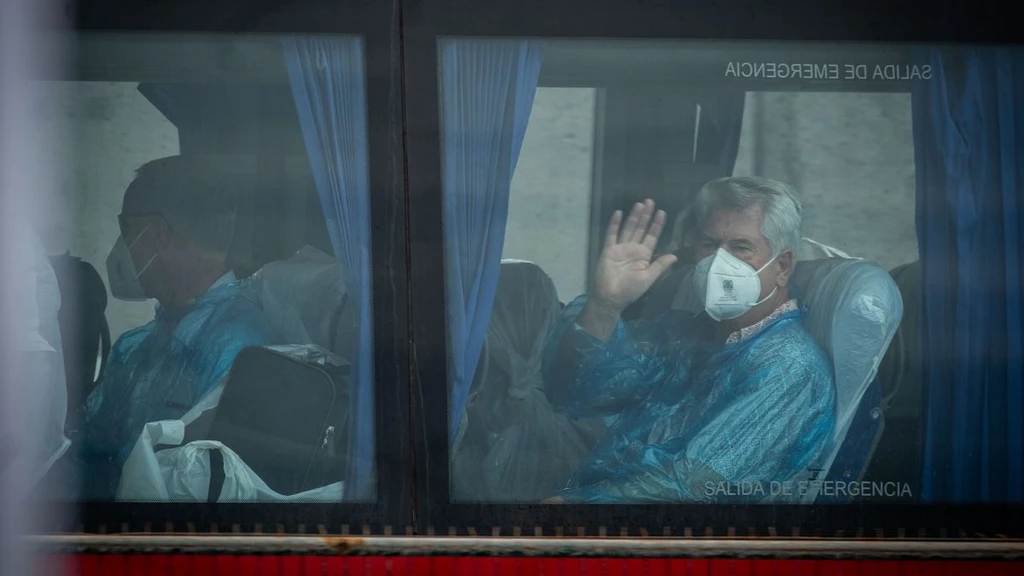
In the wake of a hantavirus outbreak on the MV Hondius cruise ship, 150 passengers are being monitored or quarantined for up to six weeks. Public health authorities say person-to-person transmission of Andes virus - the only hantavirus known to spread between humans - is rare and linked to "close and prolonged contact." But experts say that definition is far from clear.
The World Health Organization lists high-risk contacts as "intimate partners, household members, and persons with prolonged close indoor exposure." Health care providers are advised to use N95 respirators and airborne precautions, citing uncertainties.
Dr. Dean Blumberg, chief of pediatric infectious diseases at UC Davis, notes that while airborne spread is possible, it's not common. The largest documented outbreak occurred in Epuyén, Argentina, from 2018 to 2019, where a birthday party led to 34 cases and 11 deaths. Three "superspreaders" caused over 60% of infections. However, 94 other partygoers and 82 health care workers without masks did not become infected.
The cruise ship environment, with increased close contacts, likely enabled this unusual spread. The case underscores the challenge of defining "close contact" for a virus that is rarely transmitted between humans.
Disclaimer: This article is for informational purposes only and is not meant to offer medical advice.