
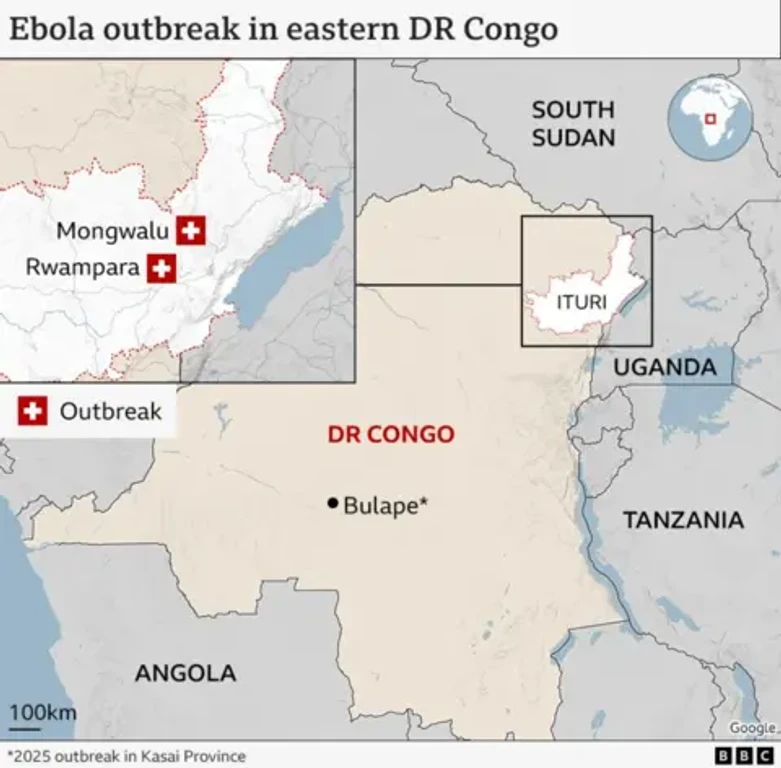
The World Health Organization has declared an Ebola outbreak in the Democratic Republic of Congo's eastern Ituri province a public health emergency of international concern.
The agency reports around 246 suspected cases and 80 deaths. The current strain is caused by the Bundibugyo virus, for which there are no approved drugs or vaccines.
Eight laboratory-confirmed cases have been identified across three health zones, including the capital Bunia and the gold-mining towns of Mongwalu and Rwampara. The virus has spread to Uganda, where a 59-year-old man tested positive and died.
WHO Director General Dr. Tedros Adhanom Ghebreyesus warned of significant uncertainties regarding the true number of infected persons and geographic spread. Countries bordering DR Congo are considered high risk due to population mobility, trade, and travel.
The WHO advises immediate isolation and treatment of confirmed cases, enhanced surveillance, and regional coordination. It warns against border closures, citing fear rather than science as the basis for such measures.
Ebola, first discovered in 1976 in what is now DR Congo, spreads through direct contact with bodily fluids, causing severe bleeding and organ failure. The average fatality rate is around 50%. This is the 17th outbreak in the country.