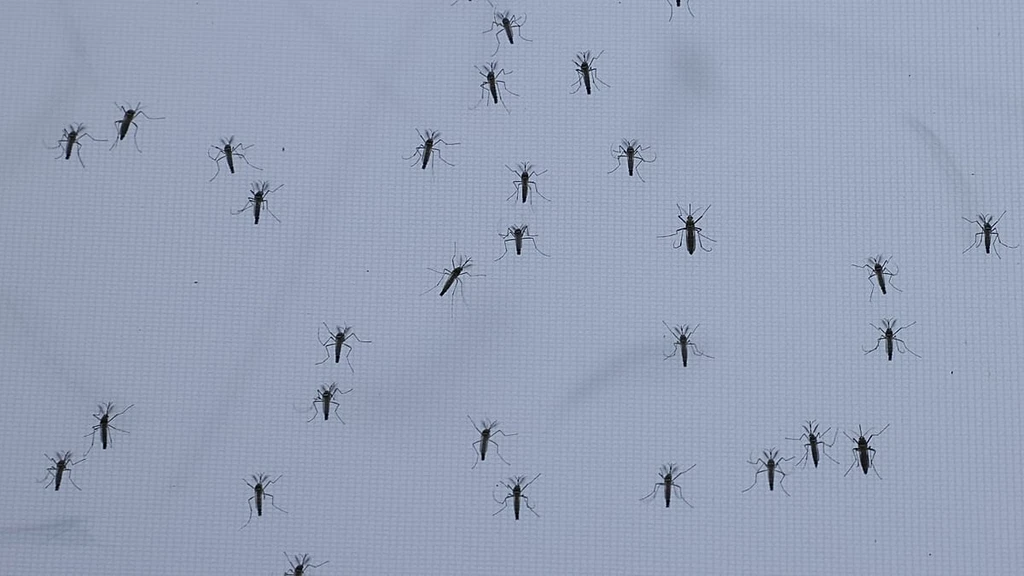
Favorable weather is fueling a surge in Germany's mosquito population, with experts tracking the spread of the aggressive Asian tiger mosquito.
The humid, warm conditions are "ideal" for mosquitoes, allowing multiple generations to develop in a single summer, according to Doreen Werner of the Leibniz Centre for Agricultural Landscape Research (ZALF).
The invasive Asian tiger mosquito presents a particular concern. Unlike native species that prefer standing water, this small, black-and-white striped insect can breed in tiny amounts of water found in urban areas like plant pot saucers. It is active during the day and can transmit pathogens like dengue and chikungunya viruses.
So far found primarily in south-west Germany, experts expect the species to spread further north. The West Nile virus, transmitted by native mosquitoes, is also circulating, with the Robert Koch Institute recording dozens of cases in recent years.
Public health officials in cities like Freiburg and Heidelberg have set up online portals for residents to report sightings. Both mosquito types can also transmit parasitic roundworms that affect animals and, rarely, humans.