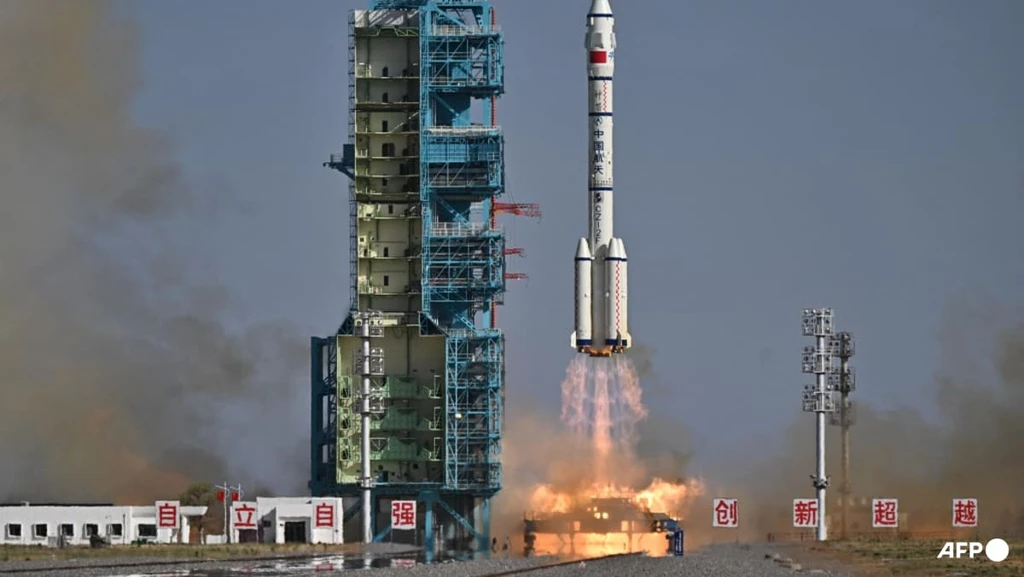
China is transforming its space program from a scientific endeavor into a cornerstone of its future economy, as outlined in its 15th Five-Year Plan. This strategic shift prioritizes aerospace development, encompassing everything from rocket launches to ambitious lunar missions and the burgeoning commercial space sector.
Key objectives include establishing a space tourism system, developing in-space data centers, exploring space mining, and enhancing space debris management. International cooperation is also emphasized, with partnerships on satellite projects and plans for a shared International Lunar Research Station.
Beyond economic goals, space is a critical arena for geopolitical competition. China's recent achievements, including landing on the moon's far side and collecting lunar samples, underscore its growing prowess. While expensive, these endeavors are heavily supported by state investment and private firms like LandSpace, which are developing reusable rocket technology. Experts suggest that building independent space capabilities is challenging, advocating for multilateral collaboration to share infrastructure and costs.
Private companies are increasingly driving this growth. Shenzhen-based Cangyu Space plans to launch high-orbit relay satellites for comprehensive coverage, supporting applications from mining operations to disaster management. Magic Cube Satellite Technology, also in Shenzhen, focuses on satellite hardware, including solar arrays. These firms benefit from local government support and policy incentives aimed at fostering a robust commercial aerospace ecosystem.
With over 600 commercial space companies and significant annual financing, China's sector is expanding rapidly. The challenge remains for these commercially driven entities to generate sustainable revenue. Meanwhile, consumer interest is growing, with startups like InterstellOr offering space tourism packages, signaling a new era where space is increasingly accessible.