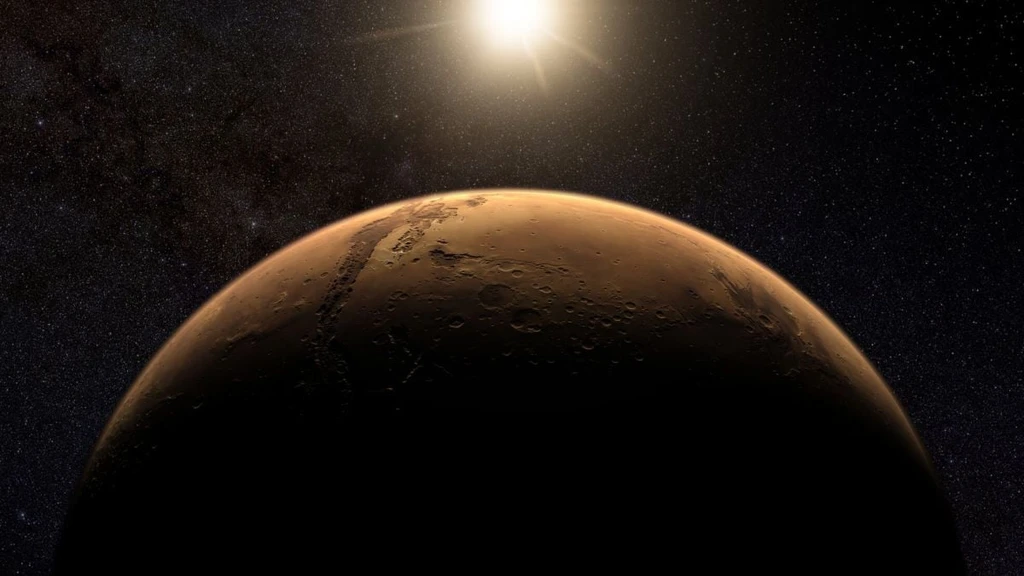
For decades, Mars was viewed as a geologically dead desert world, lacking the plate tectonics that drive Earth's complex volcanism. However, seismic data from NASA's InSight lander is overturning that simple picture.
InSight recorded over 1,300 quakes before retiring in 2022. Analysis of these seismic waves revealed unexpectedly high speeds in the Martian lower crust, suggesting a compositionally unusual layer.
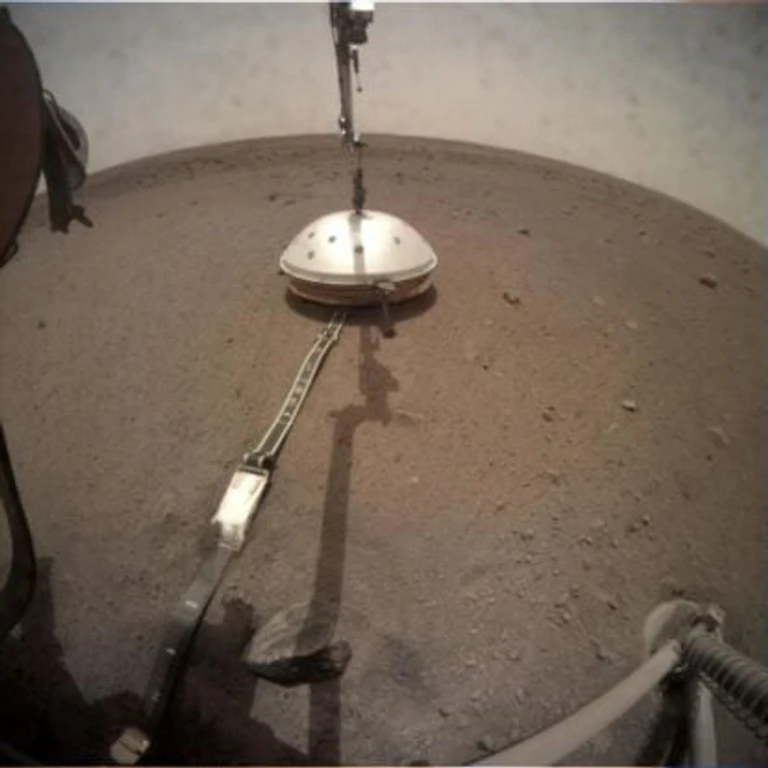
Thermodynamic modeling now points to a thick underground magma plumbing system. The data best matches a scenario with a roughly 14-kilometer-thick layer of dense ultramafic rock at the crust's base, capped by a silica-rich mafic layer. This structure forms from prolonged magma storage and differentiation.
"Our study suggests that Mars can build complex crust through long-lived transcrustal magmatic systems," said Tobermory Mackay-Champion of the University of Bristol. "That means plate recycling is not the only route to making evolved crust on hot rocky planets."
While InSight's data is from one location in Elysium Planitia, researchers believe this process was likely widespread, supported by similar seismic boundaries detected elsewhere on Mars.
The finding broadens the understanding of planetary habitability. Key processes like crustal differentiation and sustained heat transfer can occur without Earth-like plate tectonics, expanding the range of worlds that could potentially support life.
"Habitability may be achievable in a wider range of planetary settings than we once assumed," Mackay-Champion noted.
The research, published in Nature Astronomy, recasts Mars not as a simple basaltic planet, but as an example of a universal geological process for building evolved crust.