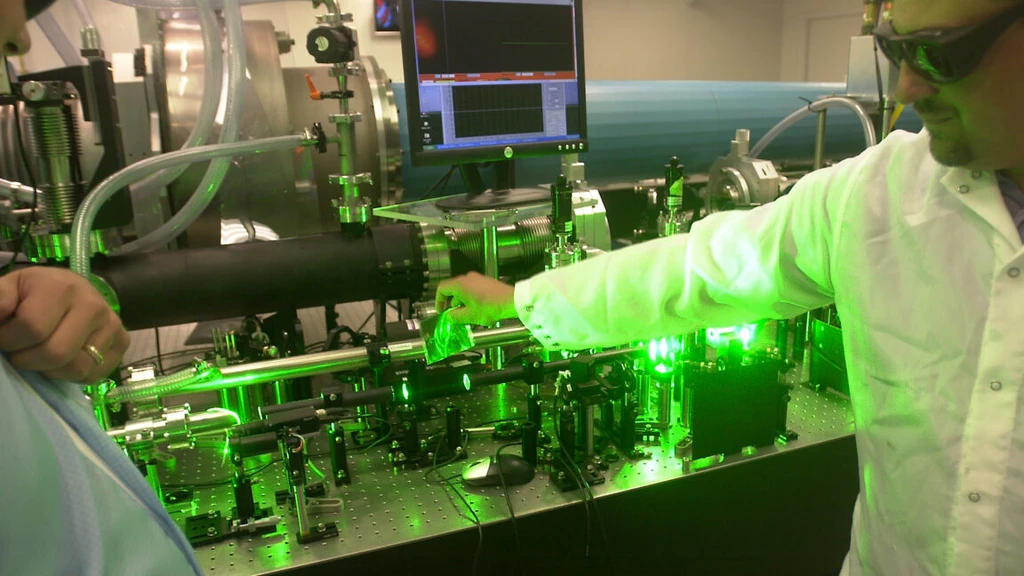
Two floors below ground at the University of Texas at Austin lies one of the United States' most powerful lasers: the Texas Petawatt (TPW). Once a government-funded research center and part of the Department of Energy's LaserNetUS network, TPW amplified light pulses to achieve petawatt-level power for fractions of a second.

The process involves stretching, amplifying, and compressing light pulses to create extreme conditions in a vacuum chamber. Targets, such as metal foil, gas jets, or plastic pellets, were used to study stellar interiors, fusion energy, and new cancer treatments.
A typical 'shot day' contrasts with the dramatic imagery often associated with such lasers. It's a long, precise procedure. The day begins early in a clean room, coaxing the laser to life by stabilizing its initial light pulse and aligning every component. This is followed by a painstaking build-up of the beam through glass rod and disk amplifiers, a process that takes hours and demands constant checks for alignment and energy levels.
The climax of the day is the "system shot." After a rigorous checklist and security sweep, a button press unleashes stored energy, creating a brief, intense burst. This moment, lasting mere seconds, generates temperatures in the millions of degrees. While the scientific outcome is the goal, failures like a stuck shutter can halt the process, requiring patient cooldowns and restarts, a reality far removed from cinematic portrayals.
These moments of intense power generation occur unnoticed beneath a bustling campus, a testament to the quiet dedication behind cutting-edge scientific research.