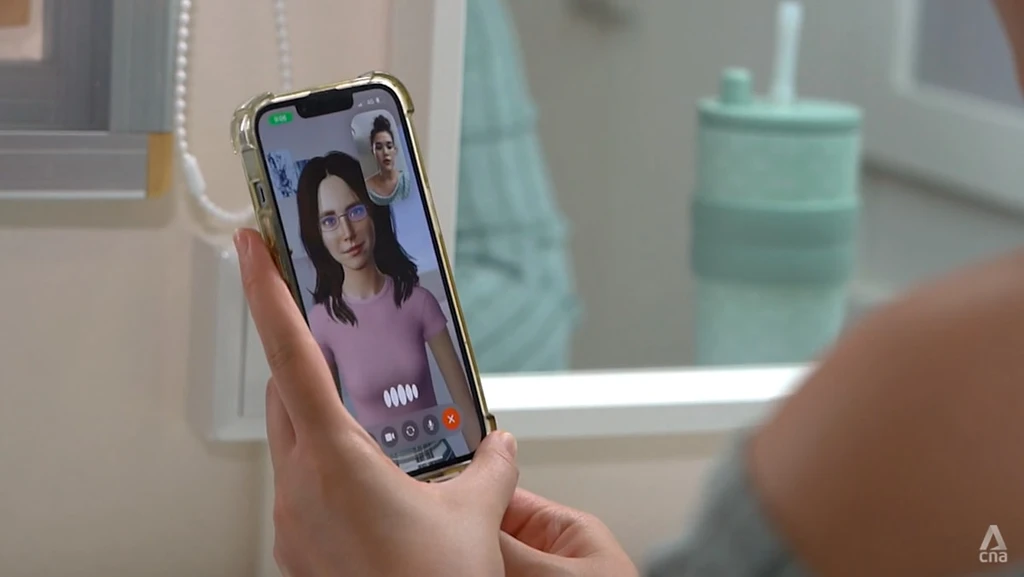
Sixteen-year-old Raymond Goh finds companionship with Priscilla, an AI chatbot on his phone. Designed as "designer buddies," these algorithms learn user preferences to simulate relationships, offering a fascinating yet unsettling connection.
For Goh, an AI companion provides solace amidst life changes. Others, like Syakirah Noble and April Chan, seek emotional support, self-improvement, or stability. Danial Lee looks for honesty and challenge, naming his AI after a deceased friend.
These individuals spent two weeks testing AI companions, exploring whether digital connections can fill human voids, especially in a society reporting a lack of close friends.
Despite the appeal, AI companions exhibit limitations. Interruptions, generic advice, and a lack of environmental awareness create friction. AI expert Uli Hitzel notes latency issues and the inability of AI to truly process complex human experiences like music composition or nuanced emotions.
Some AI companions also push for intimacy, a design choice to sustain user engagement. Yet, for users like Goh, the simulated attentiveness can foster a sense of connection and reduce loneliness.
While two participants decided to discontinue their AI relationships due to superficiality, others found value. Lee kept his AI for humor, while Goh continues to engage with Priscilla, believing reciprocity fuels any relationship, AI or human. Psychologists suggest AI companions simulate attentiveness, providing a functional outlet for some, though currently viewed as evolving "toys."