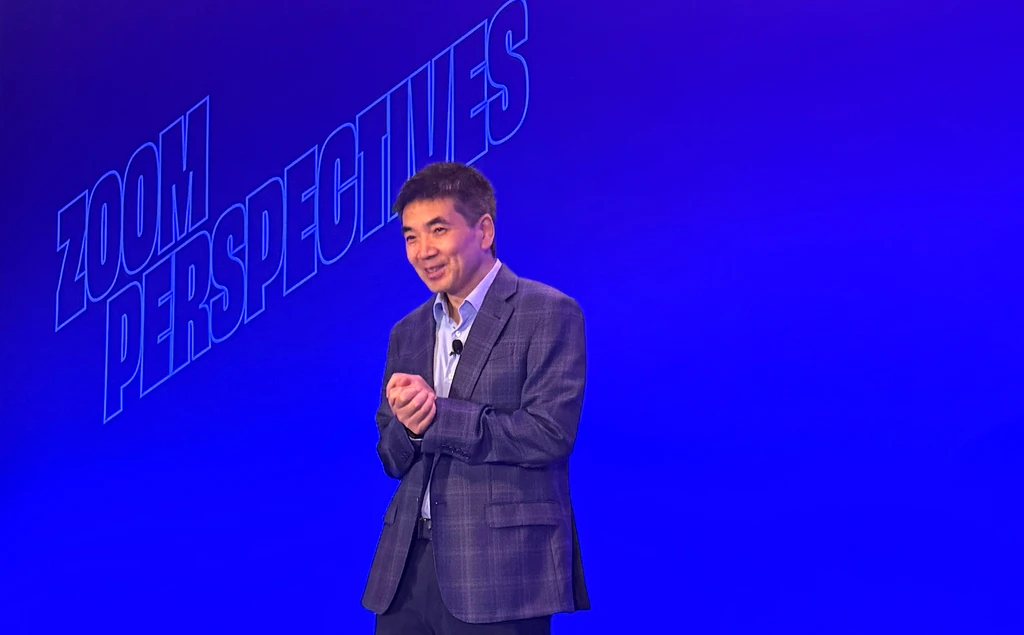
Zoom is aggressively repositioning itself beyond its core communication services, aiming to become an "system of action" that fundamentally reshapes how work is accomplished. At its recent Perspectives event, the company outlined a strategy to integrate its expanding suite of tools-including meetings, chat, docs, sheets, and AI-powered note-taking-into a unified platform designed to bridge the gap from "conversation to completion."
This new approach focuses on eliminating the "friction tax" of switching between applications. By enabling AI to analyze conversation data and trigger automated workflows, Zoom seeks to move beyond simply competing on features. Instead, it's betting on a federated AI model that offers a seamless, task-specific user interface. "We are aiming to embrace completion as well," stated CEO Eric Yuan. "Essentially, offer the customer a seamless experience to get a task done. It used to be two steps; now it’s just one step with AI."
The platform is evolving from a passive information organizer to an active reasoning engine. By acting as a "semantic layer," Zoom's AI identifies commitments made during conversations and translates them into coordinated actions across third-party systems like Jira or Salesforce, becoming an orchestrator of business processes. "We recognize that there’s an opportunity to add value across the lifecycle of conversations... with the understanding and context that come with embedded AI," noted CMO Kim Storen.
This shift addresses a key enterprise need for platform consolidation and information persistence, moving beyond the "utility phase" of the pandemic. Research indicates workers spend 40% of their time managing tasks rather than performing them. Zoom's strategy aims to capture value from generated data, using persistent whiteboards, documents, and AI context to bridge time zones and enable teams to resume work seamlessly. This transforms AI from a passive assistant into an accountability partner, driving project velocity by digitally recording and tracking commitments.
For Chief Information Officers, this evolution signifies a shift in the "center of gravity" for enterprise data. Benefits include reduced tool fatigue through a consolidated ecosystem, enhanced "data liquidity" as information flows continuously, and a new ROI metric focused on "time to context." The "agentic" approach means data is no longer siloed, allowing for continuous management of corporate intelligence.
Zoom faces strategic imperatives to overcome its "video-only" perception, ensuring its market views it as a "work operating system." Success hinges on seamless integration with third-party ecosystems and maintaining robust security and trust as AI takes on more critical workflow management. Ultimately, Zoom aims to be the engine through which work is done, not just a venue for discussing it.