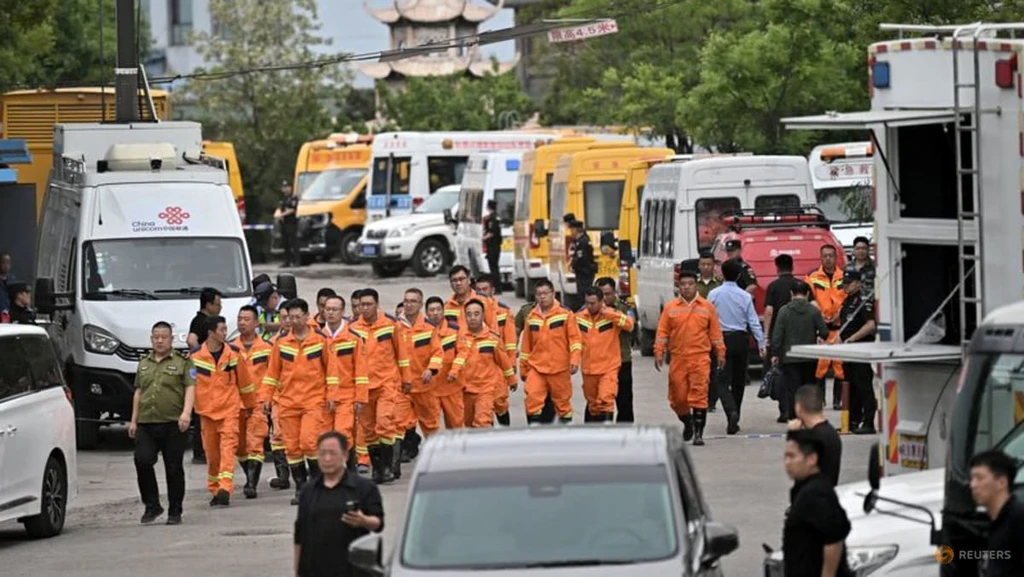
BEIJING - An initial probe into the deadliest mining tragedy in China in over 15 years has uncovered hidden tunnels, missing safety trackers, and fake doors designed to deceive inspectors, state media reported Tuesday.
At least 82 people were killed in a gas explosion Friday at the Liushenyu mine in Shanxi province. Two miners remain missing, and 128 are hospitalized. The blast is the worst since 2009 when 108 died in Heilongjiang.
The official Xinhua news agency says the mine, controlled by Shanxi Tongzhou Coal Coking Group, maintained two sets of plans - one actual, one for inspections. Known colloquially as "yin-yang drawings," the dual systems allowed unregistered mining to operate outside regulatory oversight, with coal from those hidden tunnels going untaxed.
Workers used wire mesh and plastic sacks sprayed with mortar to construct fake doors that resembled rock walls. When inspectors arrived, workers would seal the doors and smear coal ash to blend them into the tunnel.
The operator hired subcontracted labor for concealed tunnels without providing required location trackers or logging them in official records. At the time of the blast, the official log showed 124 workers underground. In reality, 247 were working - 123 were untracked.
The lack of accurate maps and miner location data severely hampered rescue efforts. The mine, classified as a "high-gas mine" with elevated blast risk, also deliberately avoided installing gas-monitoring equipment.
Regulators had fined the operator in 2025 for concealed working faces, but the penalty failed to deter illegal production. Following the disaster, some mines across China have halted or reduced production for safety inspections.