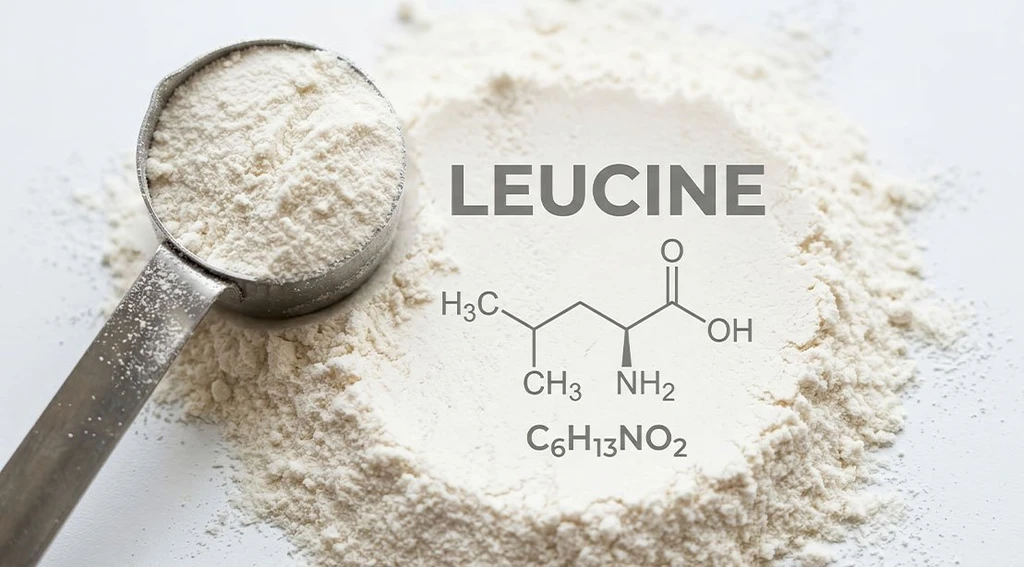
Leucine, an essential amino acid found in meat, dairy, and legumes, plays a far more dynamic role than just building muscle.
Scientists at the University of Cologne have detailed the specific mechanism by which this nutrient powers human cells. Their research demonstrates that leucine directly impacts energy production within the mitochondria.
“We were thrilled to discover that a cell’s nutrient status, especially its leucine levels, directly impacts energy production,” said Dr. Qiaochu Li, the study’s first author. “This mechanism enables cells to swiftly adapt to increased energy demands during periods of nutrient abundance.”
The investigation found that leucine tweaks proteins on the surface of the mitochondria, down regulating interferences to enhance performance. This discovery places leucine at the center of cellular metabolism, providing a clear pathway for how the body converts food into fuel.
The recommended daily intake is roughly 17.7mg per pound of body weight, though athletes often require more. A single large egg contains 538mg, while 100 grams of Parmesan cheese packs a powerful 3.4 grams.
Beyond energy, researchers believe this breakthrough opens a new front in therapeutic development. Understanding how leucine influences mitochondrial metabolism could lead to advanced treatments for diseases caused by impaired energy production, including cancer and metabolic disorders.