
Neuroscientists in Singapore have found evidence that night shift work is linked to brain volume loss in the thalamus and amygdala, regions crucial for sleep-wake regulation, memory, and emotional control.

The largest study of its kind analyzed MRI and health data from over 14,000 middle-to-older-age adults. Among 2,122 shift workers, researchers observed modest but detectable volume loss in the right thalamus and left amygdala, even after accounting for age, sex, and other factors.
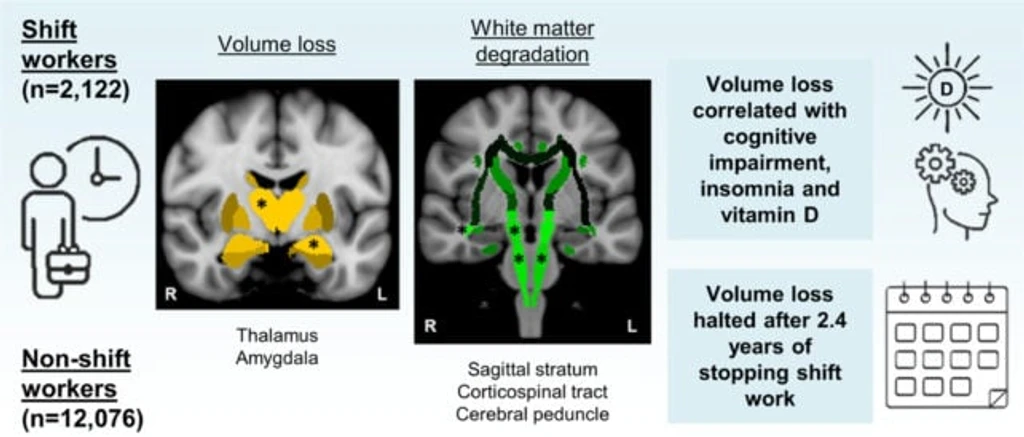
Lead author Thomas Welton notes these changes may be an early marker of neural vulnerability from chronic circadian disruption. Crucially, the study found that if shift work is stopped, brain volume losses partially recover within roughly two and a half years. The findings are published in NeuroImage.