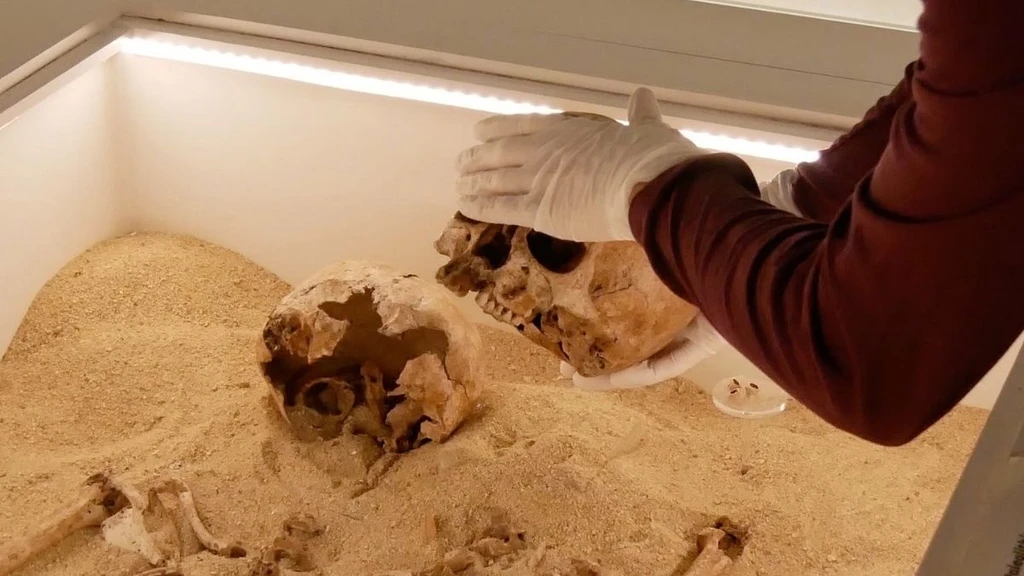
Researchers have identified a rare genetic disorder in a mother and daughter, buried together over 12,000 years ago in southern Italy. Modern genetic techniques applied to ancient DNA recovered from their remains revealed the pair were closely related females.
The younger individual was diagnosed with Acromesomelic Dysplasia, Maroteaux type (AMDM), a genetic disorder affecting bone growth caused by mutations in the NPR2 gene. This marks the earliest documented instance of AMDM.
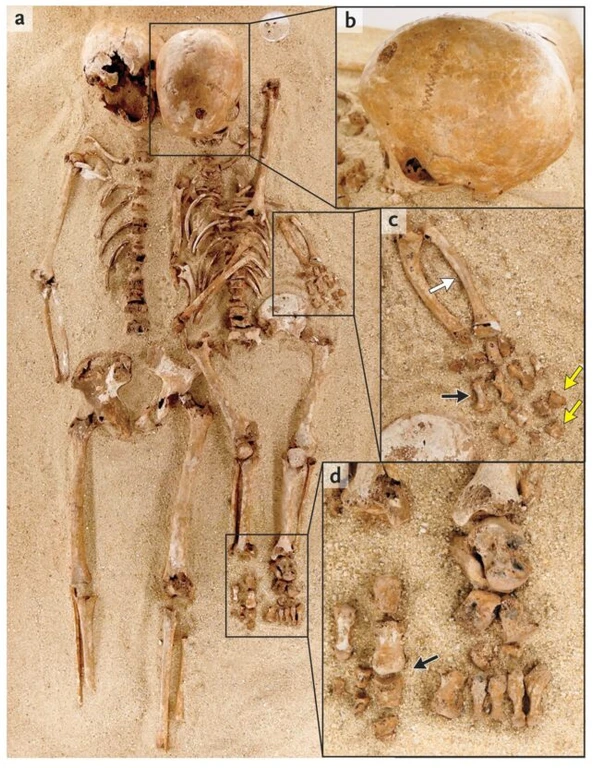
The older woman exhibited a milder form of short stature, likely due to a heterozygous mutation in the same gene. The study suggests the family provided care for the daughter, enabling her survival into late adolescence despite significant physical challenges.
This discovery underscores that rare genetic diseases have existed throughout human history, providing insights into prehistoric health and familial support systems.