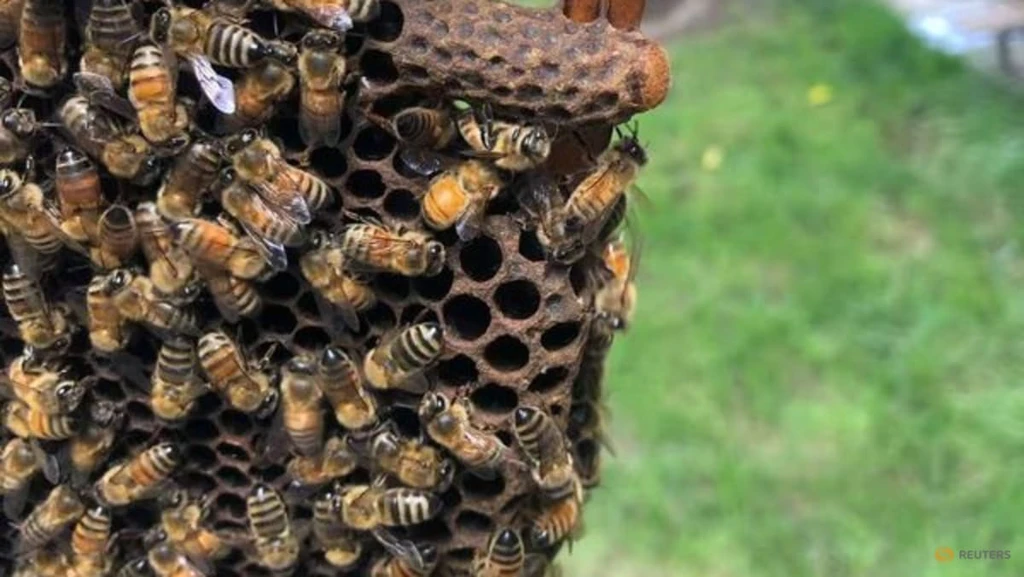
For decades, science held that royal jelly alone transformed ordinary larvae into honeybee queens. New findings published in Nature challenge this dogma, revealing that the wax chamber itself acts as a critical "smart incubator."
Kai Wang of the Chinese Academy of Agricultural Sciences led the study, demonstrating that queen cells possess unique physical and chemical traits. The wax is softer, melts at higher temperatures, and emits specific scents that likely trigger hormonal changes. Larvae raised in standard worker wax suffered high mortality, even when fed royal jelly.
To construct these specialized chambers, young worker bees temporarily transform into "living furnaces." They raise their thoracic temperatures above 39°C (102°F) to mold the high-melting-point wax, all while maintaining other hive duties. This process involves distinct, short-term shifts in gene activity.
The discovery has significant implications for apiculture. Boris Baer of the University of California, Riverside, notes that understanding natural queen production could help breed healthier colonies. With managed honeybees pollinating over 80 major crops, improving queen resilience is vital amid rising colony losses in the US and Europe.
The study underscores the hive as a "superorganism," where collective engineering shapes destiny. As Wang stated, "Eating well is important, but living in the perfect home is what truly changes your destiny."