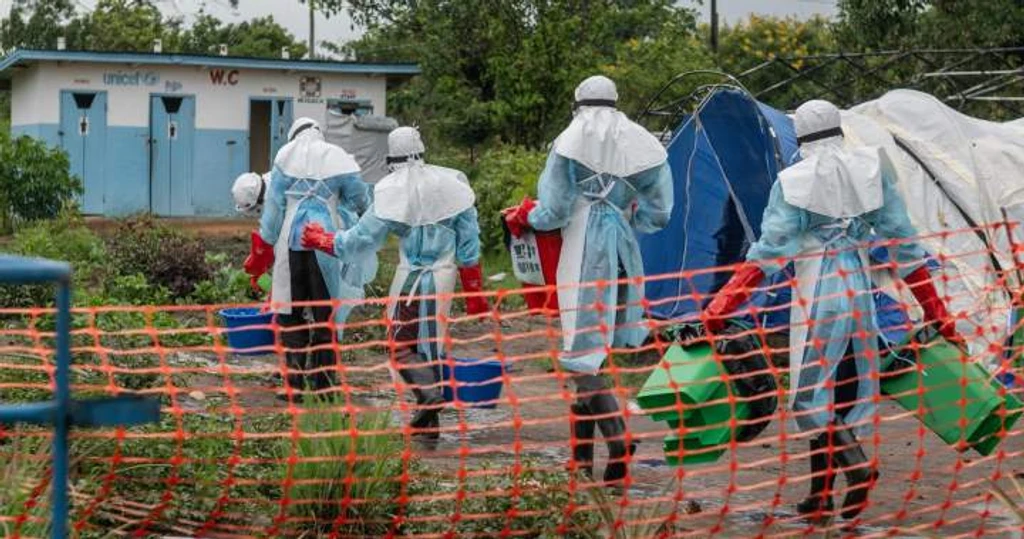
As a rare strain of Ebola virus continues to spread in the Democratic Republic of Congo and Uganda, here’s what Canadians need to know.
Yes. There are a few strains of viruses that cause Ebola disease. The most common are the Ebola virus, also called the Zaire strain, and Sudan virus, said Dr. Isaac Bogoch, an infectious diseases specialist at the University Health Network in Toronto.
The type of Ebola causing the outbreak that’s happening right now is called the Bundibugyo virus.
Symptoms are similar for all strains of Ebola and can start with fever, fatigue, muscle pain, headache and sore throat, according to the World Health Organization. That can progress to vomiting, diarrhea, abdominal pain, rash and impairment of kidney and liver function.
Internal and external bleeding, including blood in the gums or in stool, can also happen, but not as often as other symptoms.
One of the challenges in diagnosing Ebola is that several of the symptoms also happen in other infectious diseases such as malaria, typhoid fever and meningitis, so diagnostic testing is vital.
The incubation period for Ebola is two to 21 days. People with Ebola are not contagious until they have symptoms, said Trish Newport, a Canadian who works as an emergency manager for Doctors Without Borders.
Ebola virus is spread through contact with bodily fluids.
Monoclonal antibodies that help the body fight off disease can treat the Zaire strain, Bogoch said, but have not been proven to work in people infected with the Bundibugyo strain.
There are also vaccines that can be given to someone exposed to the Zaire strain to either head off infection or at least reduce the severity of illness - but again, those haven’t been tested with Bundibugyo.
GAVI, the Vaccine Alliance and other partners are working to assess ways to accelerate development of candidate vaccines that are in the research and development phase - but it could be months before doses are ready for clinical trials.
There has never been an Ebola case in Canada.
On Wednesday, Ontario’s health ministry said it was testing someone who had recently returned from East Africa “out of an abundance of caution.”
If there was a case of Ebola in Canada, both Bogoch and Thumath said the country’s public health and hospital systems would be well-equipped to handle it.