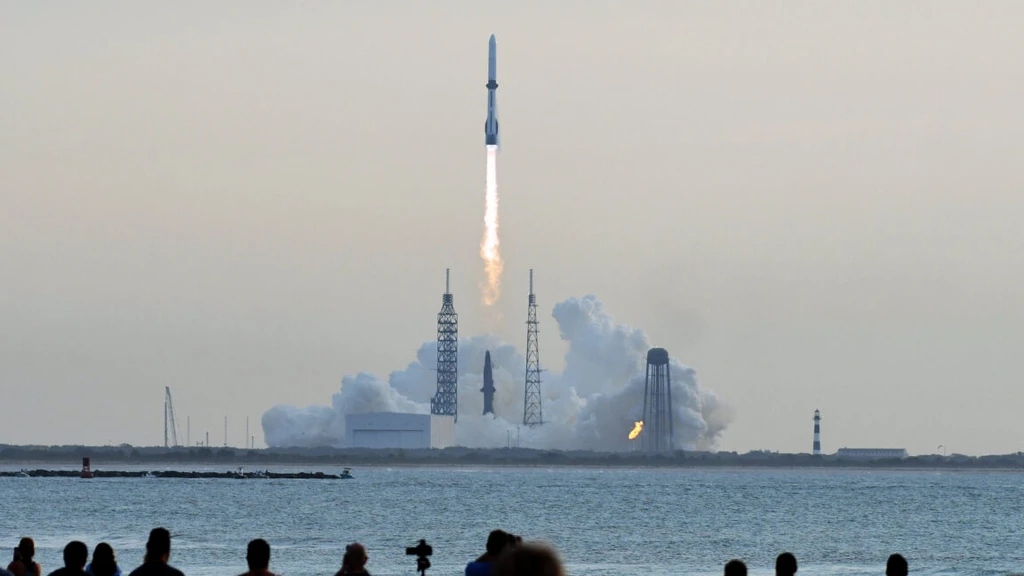
Blue Origin achieved a significant milestone with the third flight of its New Glenn rocket, successfully reusing its orbital-class booster for the first time. The 321-foot rocket lifted off Sunday morning from Cape Canaveral Space Force Station, Florida. Its first stage, powered by seven methane-fueled BE-4 engines, performed as expected, separating and guiding itself for a controlled landing on a recovery ship in the Atlantic Ocean. This booster, named "Never Tell Me The Odds," had previously flown in November.
However, the mission's success was marred when the rocket's upper stage, powered by two BE-3U engines, failed to place its payload into the intended orbit. The satellite, a cellular broadband communications satellite for AST SpaceMobile, was released into an orbit deemed "too low to sustain operations." AST SpaceMobile confirmed the satellite powered on but stated it will be de-orbited, with costs expected to be recovered under an insurance policy.
This upper stage failure represents a setback for Blue Origin, particularly concerning its role in NASA's Artemis lunar program. The company plans to use a human-rated version of its Blue Moon lander for Artemis missions, and reliable launches of its New Glenn rocket are critical for that program's schedule.