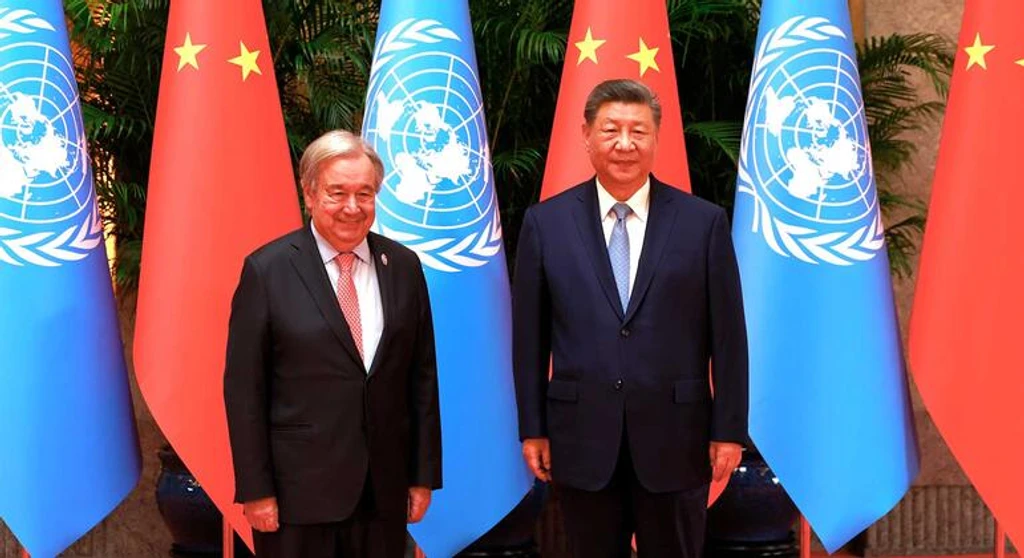
At the World Artificial Intelligence Conference in Shanghai, UN Secretary-General Antonio Guterres called for global governance of artificial intelligence, warning the technology could widen inequality without international cooperation.
Guterres described AI as both humanity's greatest opportunity and a major risk, stressing its future must be shaped by all of humanity, not a handful of countries or companies.
The UN has advanced AI governance initiatives, including a Global Dialogue on AI Governance held in Geneva. The next phase, Guterres said, is turning commitments into practical support so all countries can benefit.
He highlighted AI's potential to drive progress in medicine, education, and food systems but noted that one-third of humanity remains offline. Computing power and investment are concentrated in a few nations, risking greater divides.
Guterres outlined three priorities: expanding capacity in developing countries, establishing international safety standards, and making AI environmentally sustainable. He urged major AI companies to power operations with renewable energy by 2030 and stressed that human rights must be protected.
“The defining question is whether that transformation will reduce inequalities or reinforce them,” he stated.