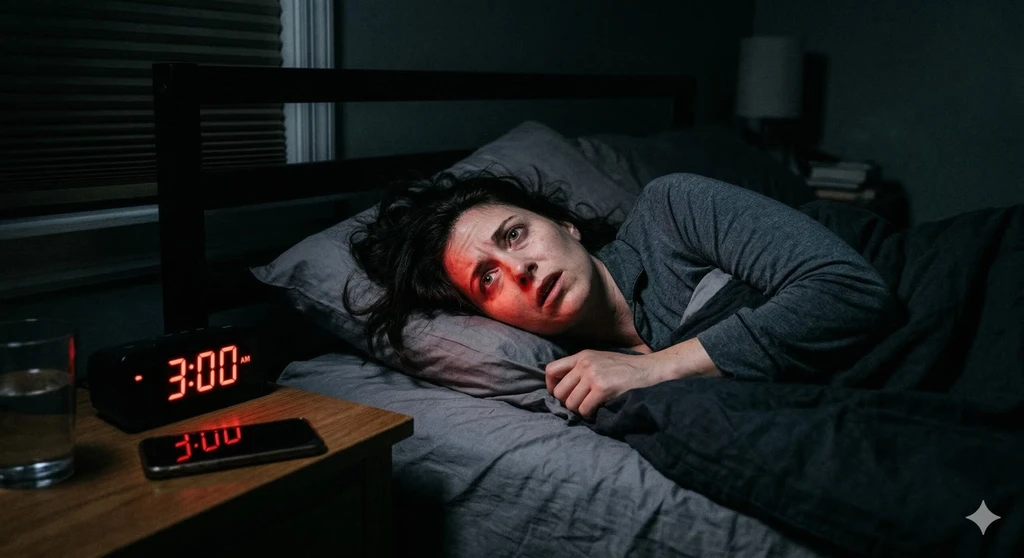
It’s 3 a.m. Your eyes snap open. Your brain replays regrets and scrolls tomorrow’s to-do list. Stress spikes. You lie there, calculating lost rest.
This isn’t just exhausting - it impairs financial judgment and physical health.
Sleep medicine physician Dr. William Lu recommends cognitive shuffling: a non-pharmaceutical technique developed by Canadian scientist Dr. Luc P. Beaudoin.
The method disrupts anxious thought loops by forcing your brain to generate random, unrelated words - mimicking the neural randomness of natural sleep onset.
Three steps:
- Choose a neutral anchor word - e.g., "sleep".
- Visualize unrelated items starting with the first letter: sun, snake, shoe, soup.
- Move to the next letter - "l": lamp, lion, lips. No logic required.
Most users fall asleep before reaching the third letter.
If anxiety persists after 20 minutes, get out of bed. Go to a dim room. Fold laundry or read a dense book. Return only when eyelids feel heavy.
Two critical mistakes to avoid: checking your smartphone - blue light suppresses melatonin - and taking over-the-counter sleep supplements, now linked to elevated heart failure risk per clinical warnings.