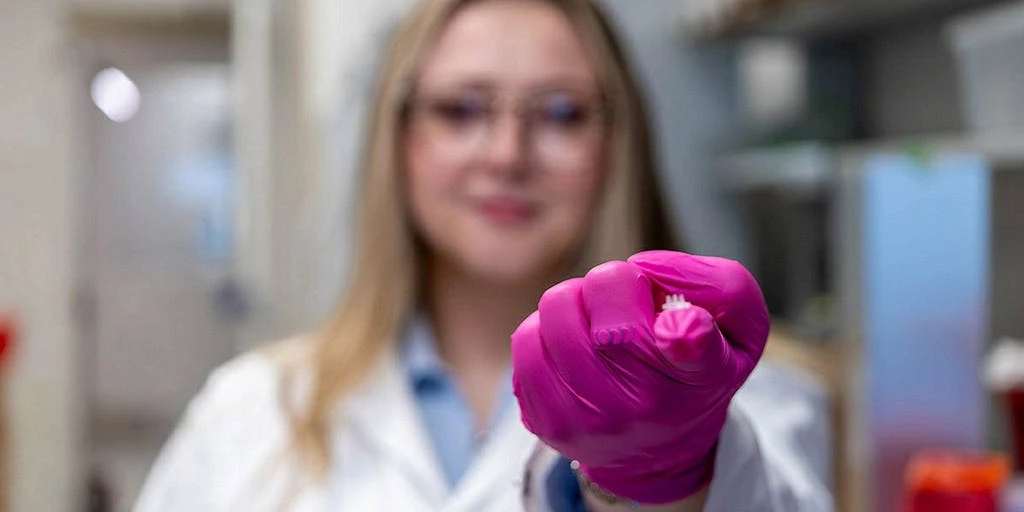
A groundbreaking 'living bandage' developed at Rice University in Texas could transform wound care. The patch acts as a continuous mini-factory, delivering three key healing cytokines-IL-10, IL-12, and Transforming Growth Factor-beta-directly to the wound site.
Traditional ointments and injections fail because fragile proteins break down quickly. The new patch houses engineered cells inside a protective shield, allowing nutrients and therapeutic proteins to pass through while preventing immune rejection. A special hydrogel helps the patch blend naturally with the wound.
In lab tests on rodents and pigs, the patch significantly accelerated healing. Professor Omid Veiseh, director of the Rice Biotech Launch Pad, stated: 'By maintaining a consistent presence of these signaling molecules at the wound site, we can more effectively engage the body’s natural healing response.'
The platform is customizable-engineered cells can be adapted to produce different protein combinations for individual patient needs. Study co-author Christian Schreib noted, 'The ability to tune both the type and timing of cytokine delivery opens the door to more precise control over the healing process.'
The technology is still in early stages and has not yet been tested on humans. The study was published in Nature Biomedical Engineering.